 Pin it
 The smell of melting herb butter on warm bread is one of those simple pleasures that stops me in my tracks every single time. I stumbled onto this combination during a lazy Sunday afternoon when I had an abundance of herbs from my windowsill garden and a loaf of sourdough that needed attention. Now it is my go-to when friends drop by unexpected or when I need something deeply satisfying in under fifteen minutes.
Last summer my neighbor Sarah came over for what was supposed to be a quick coffee and ended up staying three hours because we could not stop eating these. We sat on my back porch watching the sunset and picking at the platter until every crumb was gone. That afternoon taught me that sometimes the most memorable moments happen around the simplest food shared with good company.
Ingredients
- Crusty artisan bread: Sourdough or baguette works beautifully because the sturdy crust holds up under the butter while the interior stays tender in the oven
- Unsalted butter softened: Starting with unsalted lets you control the seasoning exactly and room temperature butter mixes seamlessly with the herbs
- Fresh parsley: This brings a bright clean flavor that cuts through the richness of the butter
- Fresh chives: Their mild onion flavor adds depth without being overwhelming
- Fresh thyme: Earthy and aromatic thyme pairs perfectly with garlic and lemon
- Garlic clove minced: One clove is enough to give you that savory backbone without overpowering the delicate herbs
- Lemon zest: The essential oils in the zest wake up all the other flavors and add brightness
- Freshly ground black pepper: A little heat balances the richness and makes the herbs pop
- Fine sea salt: This seasons the butter itself while you mix it
- Flaky sea salt: The finishing touch adds crunch and little bursts of salty contrast
Tired of Takeout? 🥡
Get 10 meals you can make faster than delivery arrives. Seriously.
One email. No spam. Unsubscribe anytime.
Instructions
- Get your oven ready:
- Preheat to 200°C 400°F or turn on your broiler to high setting
- Make the magic butter:
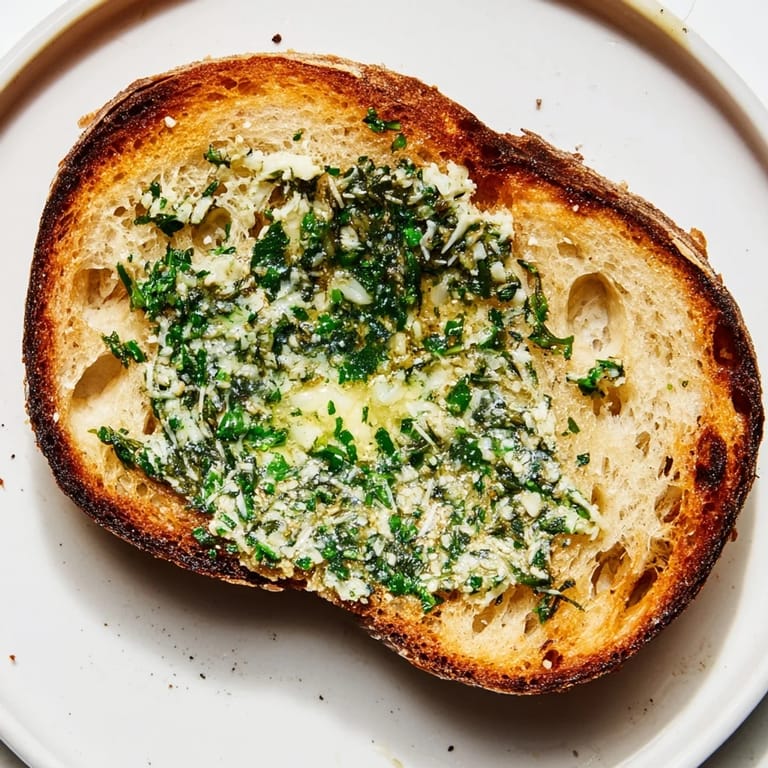
- In a small bowl mash the softened butter together with parsley chives thyme garlic lemon zest pepper and fine salt until everything is evenly distributed
- Toast the bread:
- Slide the bread slices onto a baking sheet and toast for 2 to 3 minutes until just crisp and lightly golden
- Spread generously:
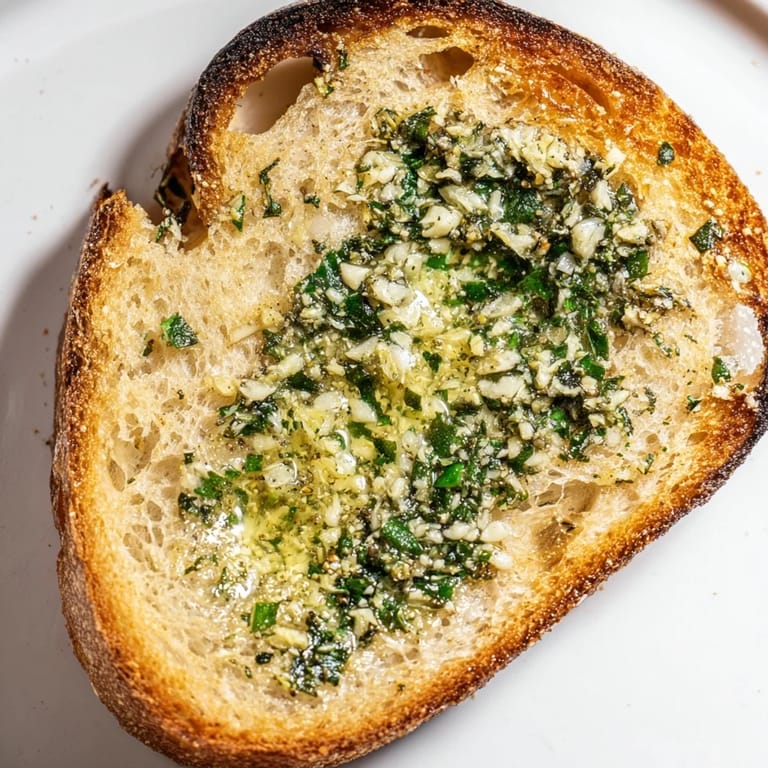
- While the bread is still warm slather each slice with a thick layer of your herb butter
- Melt and bubble:
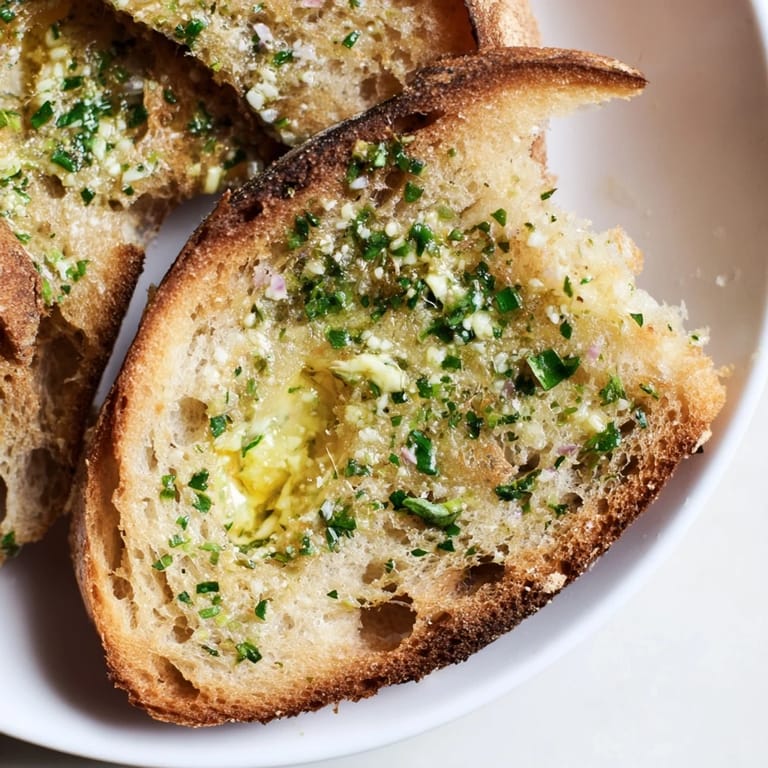
- Return the buttered toasts to the oven for another 1 to 2 minutes until the butter melts and the edges turn golden brown
- Finish with flair:
- Sprinkle with flaky sea salt right out of the oven and serve while still warm
 Pin it
 My brother in law still talks about the first time he tasted these at my dinner party. He took one bite closed his eyes and said he could eat these every day for the rest of his life. Something about the combination of warm bread fragrant herbs and that final crunch of flaky salt makes people pause their conversations and really savor what they are eating.
Making It Your Own
I love adding a pinch of red pepper flakes to the butter when I want a little heat that lingers. Sometimes I swap in dill or tarragon depending on what looks fresh at the market or what I have growing in my garden. The formula stays the same but the personality shifts with every small change.
What To Serve With Herb Butter Toast
These toasts shine alongside a crisp white wine like sauvignon blanc or pinot grigio which cuts through the richness. A light soup such as tomato or vegetable broth makes this into a proper meal. I have also served them as the appetizer course before pasta or salad and they disappear every single time.
Storage And Make Ahead Tips
The compound butter keeps beautifully in the refrigerator for up to a week or in the freezer for three months. I often make a double batch roll it into a log wrapped in parchment and freeze slices for emergency entertaining. The bread should be toasted fresh though because reheated never quite achieves the same crisp texture.
- Form the butter into a log using plastic wrap for easy slicing later
- Let frozen butter thaw in the refrigerator overnight before using
- Use a microplane for the finest most aromatic lemon zest possible
 Pin it
 There is something deeply grounding about standing at the counter chopping herbs and mashing butter by hand. This recipe reminds me that good food does not need to be complicated.
Common Questions
- → What type of bread works best for herb butter toast?
Artisan breads like sourdough, baguette, or rustic country loaf deliver ideal results. Their sturdy structure holds up well to toasting while providing a satisfying crunch. Look for loaves with a hearty crust and airy interior.
- → Can I make the compound butter ahead of time?
Absolutely. Prepare the herb butter up to a week in advance and store it refrigerated in an airtight container. For longer storage, freeze it for up to three months. Bring to room temperature before spreading for easy application.
- → How do I prevent the bread from burning under the broiler?
Keep a close watch on the toasts as broilers vary in intensity. Stay near the oven and check after 1 minute. Position the rack at least 6 inches from the heat source. Broil just until golden—edges brown quickly.
- → What herbs can I substitute in the compound butter?
Fresh dill, tarragon, basil, or rosemary work beautifully as alternatives or additions. Consider soft herbs like cilantro for bright flavor, or woody herbs like sage for earthier notes. Stick to what you enjoy or what's in season.
- → Is herb butter toast served hot or cold?
These toasts shine when served warm, right after the final broiling. The butter melts into the bread's nooks, and the flaky salt clings beautifully. If making ahead, reheat briefly at 180°C (350°F) for 3-4 minutes to restore crispness.
- → Can I add extra toppings to the herb butter toast?
Certainly. Consider thin radish slices, shaved Parmesan, or a drizzle of honey after broiling. For protein, top with smoked salmon or a poached egg. Add chili flakes to the butter mixture for subtle heat that complements the herbs.