 Pin it
 The first time I made guava cheesecake was on a whim, standing in front of a jar of guava marmalade at the market and thinking, why not? I'd grown up eating plain cheesecake at family gatherings, but something about that pink-golden swirl called to me—a promise of tropical warmth against creamy richness. That afternoon, my kitchen filled with the smell of toasting Maria cookies and the slight tartness of cream cheese, and I knew I was onto something special.
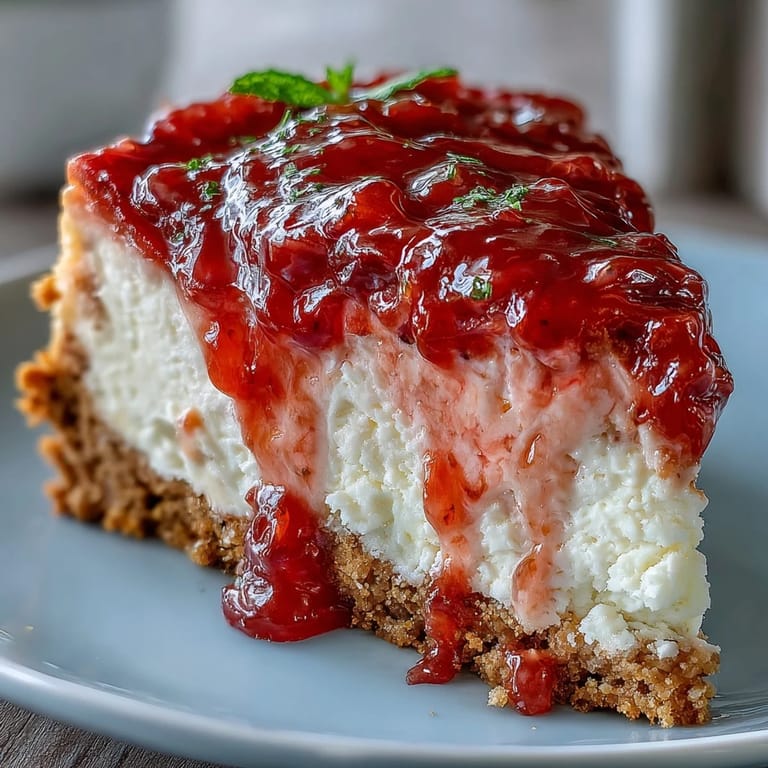
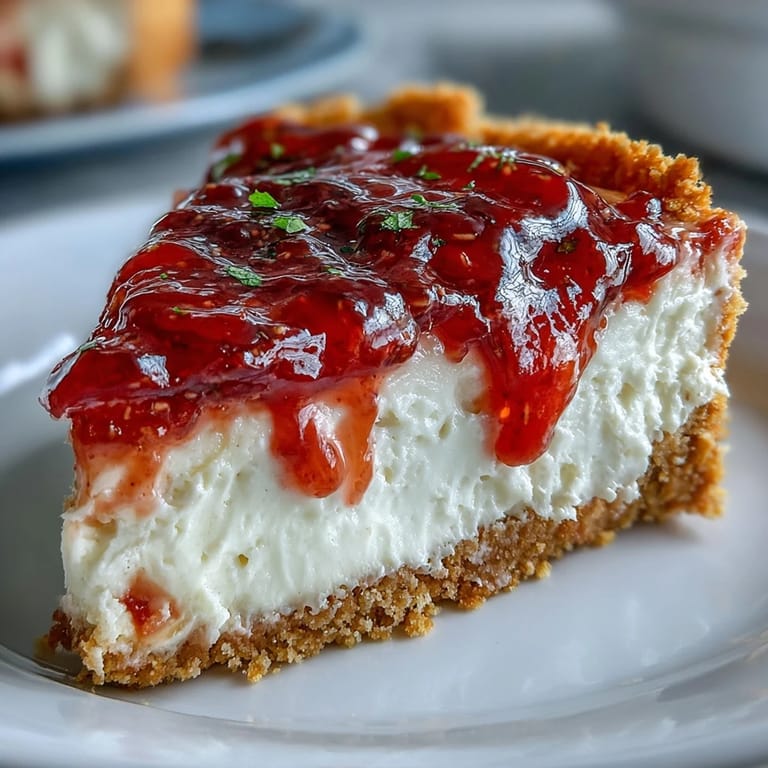
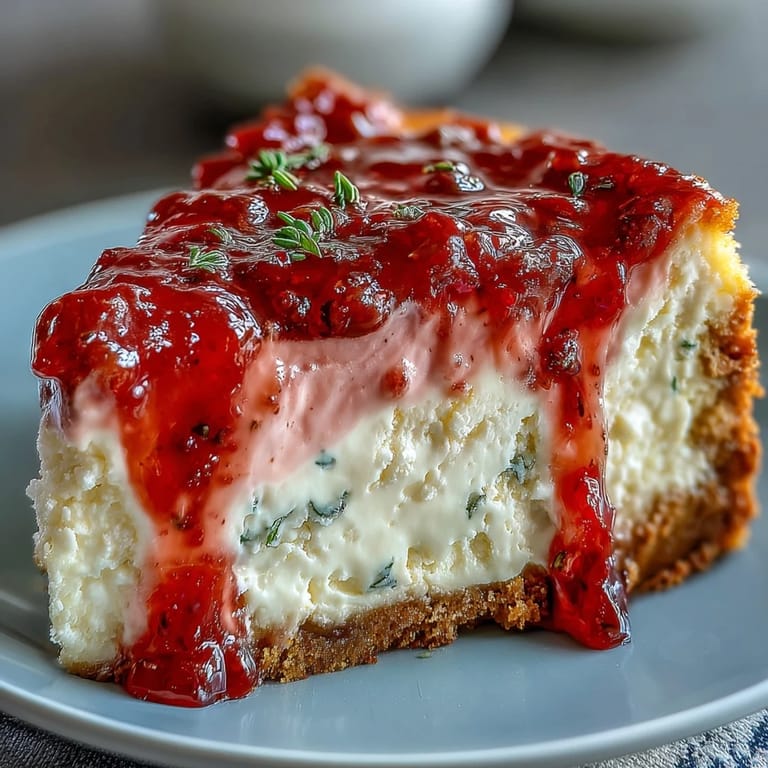
I made this for my neighbor's birthday dinner, and watching her face light up when she saw that guava marble running through the slice was worth every minute of waiting for it to chill. She asked for the recipe immediately, and I realized then that this wasn't just another dessert—it had become the dish people remember.
Ingredients
- Maria cookies: These mild, slightly sweet biscuits create a sturdy crust that won't overpower the guava; if you can't find them, digestive biscuits work beautifully too.
- Unsalted butter: Melted butter binds the crumbs together and gives the crust a tender, buttery bite—salted would throw off the balance with everything else.
- Granulated sugar: Use separate amounts for the crust and filling; the crust gets just a touch, while the filling needs enough to balance the tartness of the cream cheese.
- Cream cheese: Softening it first is non-negotiable; cold cream cheese will lump up and you'll beat it to death trying to smooth it out.
- Sour cream: This adds moisture and a subtle tang that plays beautifully against the guava's sweetness.
- Eggs: Room temperature eggs fold in smoothly without overmixing, which keeps the texture light and prevents cracks.
- Pure vanilla extract: Don't skimp here; it rounds out all the flavors and adds warmth beneath the tropical notes.
- Lime zest: Optional but worth seeking out; it's like a secret whisper that makes people ask what's in it.
- Guava marmalade or paste: The star of the show—taste it first so you know how much sweetness you're bringing to the party, and remember that heat makes it pourable.
Tired of Takeout? 🥡
Get 10 meals you can make faster than delivery arrives. Seriously.
One email. No spam. Unsubscribe anytime.
Instructions
- Prepare your pan and preheat:
- Get your oven warming to 160°C while you line a 23 cm springform pan with parchment paper. A light grease on the sides helps the parchment stick and prevents any surprise leaks.
- Make the crust:
- Pulse Maria cookies in a food processor until they're fine crumbs—think coarse sand, not dust. Mix with melted butter and sugar until it feels like wet beach sand, then press it firmly into the pan and bake for 10 minutes until it's just set.
- Cool and prepare the filling:
- Let that crust cool while you beat softened cream cheese and sugar together until smooth and creamy; this takes about 2-3 minutes and you'll feel the difference as it lightens up. Fold in sour cream gently, then add eggs one at a time, beating just until each one disappears into the mixture.
- Add the vanilla and lime:
- Stir in vanilla extract and lime zest if you're using it; the lime won't announce itself loudly, but you'll notice the depth it adds. Pour this filling over your cooled crust and smooth the top with a spatula.
- Prepare the guava swirl:
- Warm your guava marmalade in a small saucepan with a couple tablespoons of water until it's loose and pourable, stirring gently so it doesn't splatter. If you're using paste, mash it first and stir until it reaches a spreadable consistency.
- Create the marble effect:
- Drop spoonfuls of that warm guava across the cream cheese filling, then take a knife or skewer and drag it gently through the guava, creating those beautiful swirls. Don't overwork it—a few passes back and forth is all you need for that marbled look.
- Bake with care:
- Bake for 50-55 minutes; you're looking for the edges to be set while the very center still has the tiniest jiggle when you shake the pan gently. This is the difference between a creamy center and one that's dense and heavy.
- Cool slowly to prevent cracking:
- Turn off the oven, crack the door open about an inch, and let the cheesecake sit in that cooling oven for a full hour. The gradual temperature change prevents the surface from cracking as it sets.
- Chill thoroughly:
- Once it's out of the oven, let it come to room temperature, then refrigerate for at least 3 hours or overnight. The longer it chills, the cleaner your slices will be and the more the flavors will meld together.
 Pin it
 There's something almost meditative about watching a cheesecake cool in a cracked-open oven, the smell of vanilla and guava floating through your kitchen. That patience turned what could have been just another dessert into something that made people slow down and really taste it.
The Secret to a Perfect Crust
I used to skip the pre-bake step for the crust, thinking it would cook enough under the filling. What I got was a soggy bottom, which taught me that 10 minutes in a hot oven before the filling goes on makes all the difference. The crust firms up just enough to support everything sitting on top while staying tender and buttery.
Why the Guava Works
Guava has this natural tartness that cuts through richness without being harsh, and its subtle flavor doesn't shout over the creamy filling—it whispers alongside it. When I first tasted this combination, I realized that tropical flavors don't need to be loud or aggressive to transform a classic dessert into something memorable and unexpected.
Slicing and Serving Tips
A hot knife is genuinely the difference between clean slices and messy ones. I keep a tall glass of hot water next to my cutting board, dip the knife between each cut, and wipe it clean—it's a small ritual that makes every slice look bakery-worthy.
- If you're making this ahead, it keeps beautifully in the fridge for up to 4 days, wrapped loosely in plastic wrap.
- Serve it cold or at room temperature depending on the weather; warmer cheesecake tastes richer and creamier.
- A glass of Moscato or sparkling rosé alongside a slice turns dessert into a proper moment.
 Pin it
 This cheesecake bridges two worlds—it's familiar enough that everyone recognizes it as dessert, but tropical enough to feel like a small adventure on the plate. Make it once and it becomes the recipe people request by name.
Common Questions
- → Can I use fresh guava instead of marmalade?
Fresh guava contains too much water and will alter the cheesecake's texture. Guava paste or marmalade provides the concentrated flavor and proper consistency needed for the swirl. If using guava paste, mash it with a tablespoon of water until smooth and pourable before adding to your cheesecake.
- → Why did my cheesecake crack on top?
Cracking typically occurs from rapid temperature changes or overbaking. The gradual cooling method—turning off the oven and cracking the door open—helps prevent this. Also avoid opening the oven door frequently during baking, as temperature fluctuations can cause cracking.
- → Can I make this cheesecake ahead of time?
Absolutely! In fact, cheesecake tastes better when made a day in advance. The flavors have time to meld and the texture becomes even creamier. Store it tightly covered in the refrigerator for up to 5 days. For longer storage, wrap individual slices in plastic and freeze for up to 3 months.
- → What can I substitute for Maria cookies?
Graham crackers make an excellent substitute and will provide a similar texture and sweetness. Digestive biscuits, vanilla wafers, or even shortbread cookies work well too. Just aim for about 200g of your chosen cookie to maintain the proper crust-to-filling ratio.
- → How do I know when the cheesecake is done baking?
The cheesecake is properly baked when the edges are set and slightly puffy, but the center still has a gentle jiggle when you gently shake the pan. This slight wobble is normal—it will continue to firm up as it cools. Overbaking leads to a dry, crumbly texture, so it's better to slightly underbake than overbake.
- → Can I reduce the sugar in this dessert?
You can reduce the sugar in the filling by up to 25% without significantly affecting the texture. However, sugar plays a crucial role in the cheesecake's structure, so reducing it further may result in a denser, less creamy final product. The crust sugar can be reduced or omitted if you prefer a less sweet base.