 Pin it
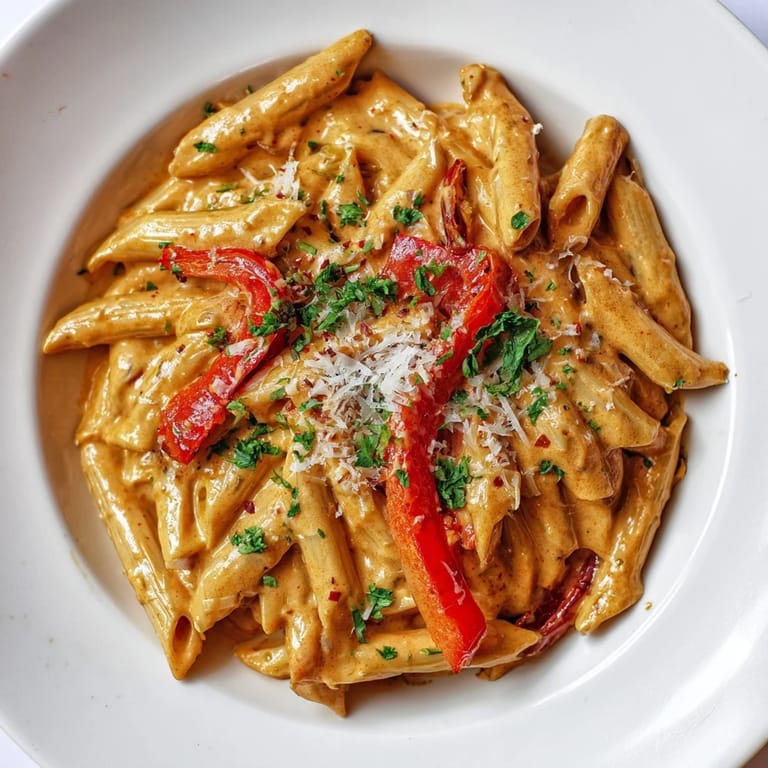
 My neighbor knocked on my door one Thursday night holding a half-empty jar of Cajun seasoning and asked if I had any cream. Twenty minutes later we were standing in my kitchen, tasting spoonfuls of this sauce straight from the pan and laughing at how something so simple could taste this good. The smoked paprika was my idea, the roasted peppers were hers, and somehow we stumbled into the kind of dinner that makes you forget you were just using up leftovers. I've made it at least a dozen times since, and it never fails to feel like a small celebration.
I made this for my brother's birthday last year because he'd been asking for something with a kick but not too heavy. He ate two full plates and spent the rest of the evening trying to guess what made the sauce so silky. When I told him it was just cream, Parmesan, and a little pasta water, he didn't believe me. That's the magic of this dish: it feels fancy, but it's built on the kind of ingredients you probably already have.
Ingredients
- Penne or fettuccine (350 g): Penne grabs the sauce in its ridges, while fettuccine wraps it up like a ribbon; either works beautifully, just cook it one minute shy of the package time so it finishes in the sauce.
- Red bell peppers (2 large, roasted): Roasting them under the broiler or over a gas flame brings out a deep, sweet smokiness that makes the whole dish sing; peel them while they're still warm and the skin slips right off.
- Yellow onion (1 small, chopped): A mild, sweet base that melts into the background but adds a gentle depth you'd miss if it wasn't there.
- Garlic (2 cloves, minced): Fresh garlic blooms in the oil and perfumes the whole pan; don't skip this step or rush it, let it soften for a full minute.
- Olive oil (2 tbsp): A good quality oil coats the vegetables and helps the spices bloom without burning.
- Cajun seasoning (1 tbsp): The heart of the dish, bringing paprika, cayenne, oregano, and thyme all at once; taste yours first because some blends are much spicier than others.
- Smoked paprika (1 tsp): This is what makes people ask what your secret is; it adds a campfire warmth that regular paprika just can't match.
- Heavy cream (200 ml): The sauce's creamy backbone; it thickens beautifully as it simmers and clings to every strand of pasta.
- Vegetable broth (60 ml): Loosens the sauce just enough and adds a savory undertone that keeps it from feeling too rich.
- Parmesan cheese (60 g, freshly grated): Freshly grated melts smoother and tastes sharper; the pre-shredded stuff has anti-caking agents that can make the sauce grainy.
- Fresh parsley (2 tbsp, chopped): A bright, grassy finish that cuts through the richness and makes the whole plate look alive.
Tired of Takeout? 🥡
Get 10 meals you can make faster than delivery arrives. Seriously.
One email. No spam. Unsubscribe anytime.
Instructions
- Boil the pasta:
- Bring a large pot of well-salted water to a rolling boil and cook your pasta until it's just al dente, with a slight bite in the center. Before you drain it, scoop out half a cup of that starchy pasta water; it's liquid gold for adjusting the sauce later.
- Soften the onion:
- While the pasta bubbles away, heat olive oil in a large skillet over medium heat and add the chopped onion, stirring occasionally until it turns translucent and soft, about three minutes. You want it sweet and tender, not browned.
- Wake up the garlic:
- Toss in the minced garlic and stir it around for about a minute, just until the kitchen smells like warmth and comfort. Don't let it brown or it'll turn bitter.
- Bloom the spices:
- Sprinkle in the Cajun seasoning and smoked paprika, stirring constantly for about thirty seconds. You'll see the spices darken slightly and smell toasty; that's when you know they're ready.
- Add the peppers:
- Slide in your roasted bell pepper slices and toss them with the spiced oil for a couple of minutes. They'll soak up all that flavor and start to meld with the onions.
- Build the sauce:
- Pour in the cream and vegetable broth, stirring everything together until it's smooth and unified. Let it simmer gently for three to four minutes, watching it thicken just slightly as the cream reduces.
- Stir in the cheese:
- Take the skillet off the heat for a moment and stir in the Parmesan, along with the salt and black pepper, until the sauce is glossy and smooth. If it looks too thick, splash in some of that reserved pasta water a little at a time until it coats a spoon nicely.
- Marry the pasta and sauce:
- Add the drained pasta directly to the skillet and toss everything together with tongs or a wooden spoon, letting the pasta heat through for a minute or two. The noodles will drink up some of the sauce and everything will come together into one cohesive, creamy dish.
- Garnish and serve:
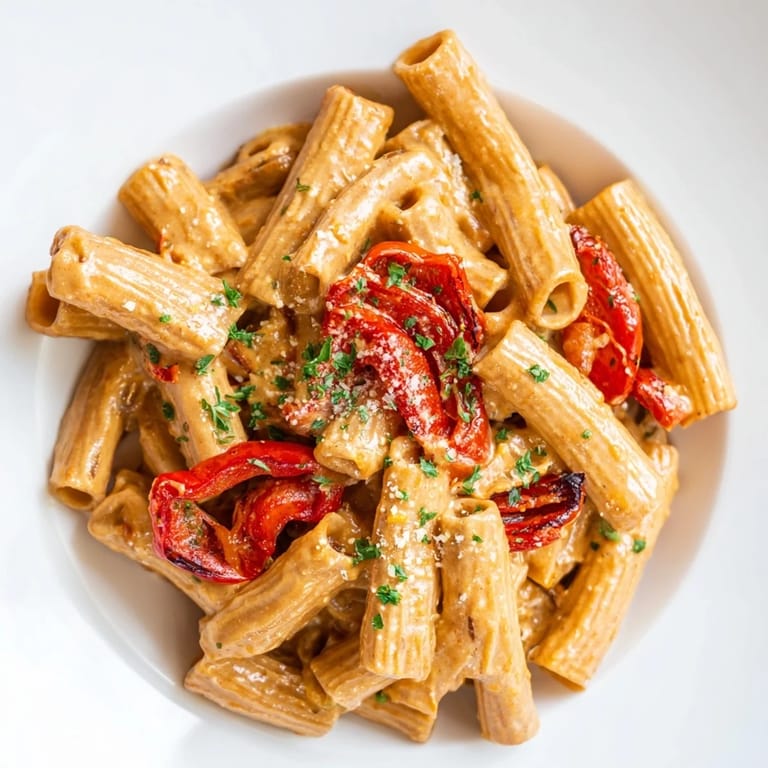
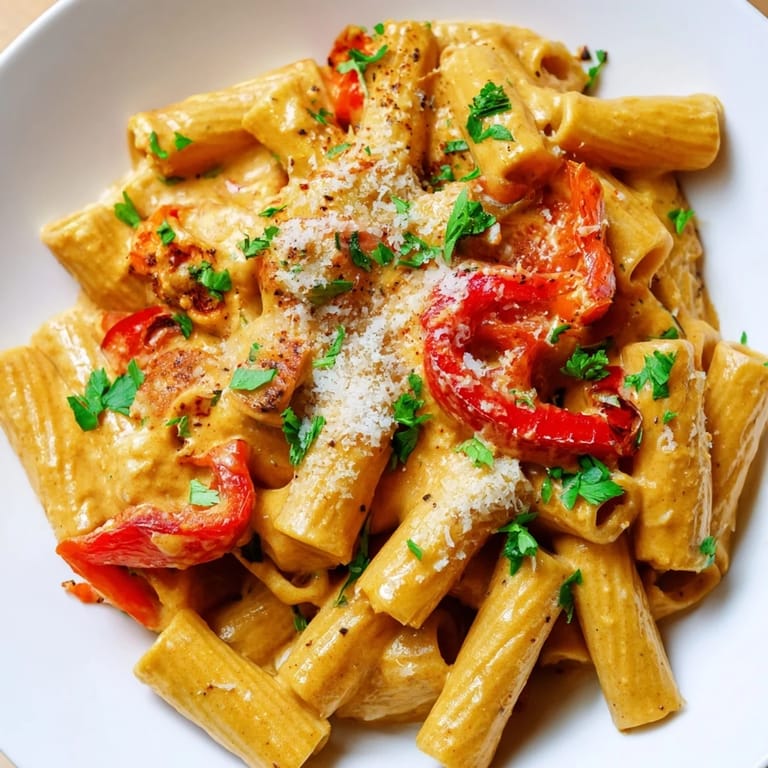
- Divide the pasta among bowls, scatter fresh parsley over the top, and finish with an extra handful of grated Parmesan. Serve it hot, while the sauce is still clinging to every piece.
 Pin it
 The first time I brought this to a potluck, I watched someone take a bite, pause, and then go back for seconds before they'd even swallowed the first forkful. That's when I knew this wasn't just a weeknight dinner, it was the kind of recipe you share with people and they actually remember it. It's become my go-to when I want to feel like I'm cooking with intention, even on nights when I'm tired and tempted to order takeout.
Making It Your Own
If you want to add protein, seared chicken thighs or shrimp work beautifully; just cook them separately with a little Cajun seasoning and toss them in at the end. I've also made this with gluten-free pasta for a friend with celiac, and it held up perfectly. You can swap the heavy cream for half-and-half if you want it a little lighter, though you might need an extra tablespoon of Parmesan to keep it rich. Some nights I throw in a handful of spinach or kale right before serving, just to add a little green and feel slightly virtuous.
What to Serve Alongside
This pasta is rich enough to stand on its own, but I like to serve it with a simple arugula salad dressed in lemon juice and olive oil to cut through the creaminess. Garlic bread is always a winner, especially if you toast it with a little Parmesan on top. If you're pouring wine, a crisp Sauvignon Blanc is perfect, though I've also enjoyed it with a light Pinot Noir on cooler evenings. Keep the sides simple; the pasta is the star here.
Storage and Reheating
Leftovers keep in an airtight container in the fridge for up to three days, and honestly, the flavors deepen overnight. When you reheat it, do it gently on the stovetop with a splash of cream or milk to loosen the sauce; the microwave works in a pinch, but stir it halfway through and add a little liquid to keep it from drying out. I don't recommend freezing this one because cream-based sauces can separate when thawed, though if you're determined, undercook the pasta slightly and freeze it in individual portions.
- Stir in a tablespoon of cream or pasta water when reheating to bring the sauce back to life.
- If the sauce looks oily after reheating, whisk in a spoonful of Parmesan to re-emulsify it.
- Don't reheat more than once or the pasta will turn mushy and lose its texture.
 Pin it
 This is the kind of dish that makes you feel capable in the kitchen, even on nights when you're winging it. I hope it becomes one of those recipes you turn to when you want comfort, a little spice, and something that feels like a hug in a bowl.
Common Questions
- → Can I make this dish ahead of time?
This pasta is best served immediately after tossing with the sauce. However, you can prepare the sauce up to 2 hours ahead and reheat gently before combining with fresh pasta.
- → How do I adjust the spice level?
Start with the full tablespoon of Cajun seasoning, then taste and adjust downward if needed. You can also reduce the smoked paprika or add hot sauce to the cream mixture for personalized heat.
- → What can I substitute for heavy cream?
Use half-and-half, crème fraîche, or plant-based cream alternatives. The sauce will be slightly thinner, so simmer an extra minute to reach desired consistency.
- → Can I prepare the roasted peppers fresh or use jarred?
Jarred roasted red peppers work wonderfully and save time. Simply drain and slice them. If roasting fresh, char under the broiler or on a flame, then peel and slice before adding to the sauce.
- → What proteins pair best with this dish?
Sliced chicken breast, shrimp, andouille sausage, or bacon all complement the Cajun flavors. Add cooked proteins in step 8 when tossing pasta with the sauce for even distribution.
- → How do I prevent the sauce from breaking?
Keep heat at medium, never high, when adding cream. Stir constantly and add Parmesan slowly to prevent curdling. If the sauce looks grainy, whisk in a splash of pasta water to smooth it out.