 Pin it
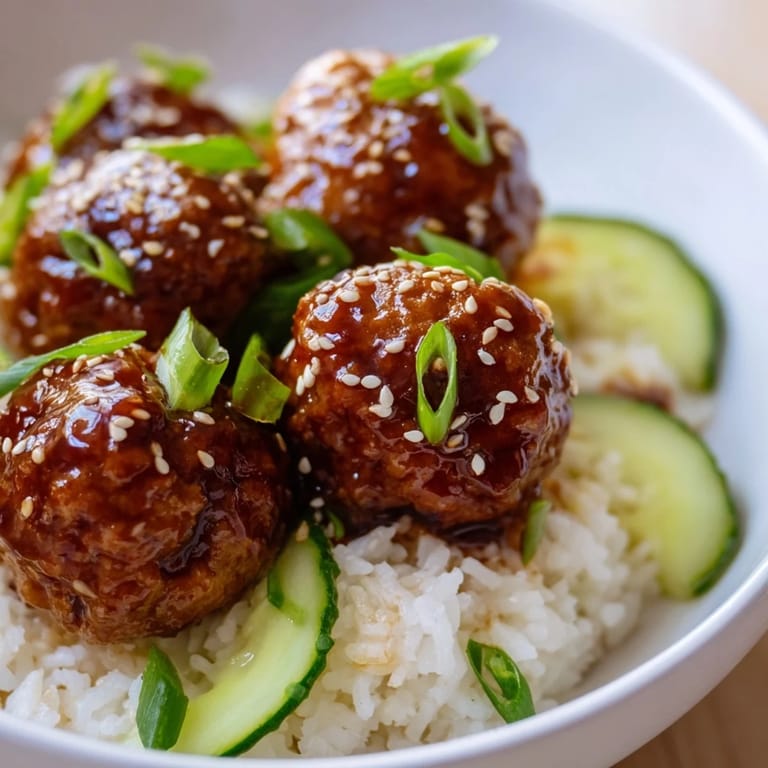
 There's something about the sizzle of meatballs hitting a hot pan that makes a weeknight feel like a small celebration. I discovered these teriyaki bowls during one of those dinners where I had leftover ground meat and a bottle of mirin I'd been meaning to use, and what started as improvisation became the dish I make whenever I want something that feels both comforting and a little bit fancy. The glaze catches the light as it caramelizes, and somehow that simple transformation makes everyone at the table pause and actually taste what they're eating.
I remember making this for my partner on a rainy Tuesday when neither of us felt like cooking, yet somehow we both wanted something satisfying. He came into the kitchen halfway through, drawn by the smell of caramelizing sauce, and ended up hovering by the stove asking if it was almost ready. That's when I knew this recipe had staying power—it's the kind of dish that makes people genuinely excited about dinner.
Ingredients
- Ground beef or chicken (500 g): The protein backbone; use whatever you have on hand, though I prefer the deeper flavor beef brings to the glaze.
- Panko breadcrumbs (40 g): These stay lighter than regular breadcrumbs and help the meatballs stay tender instead of dense.
- Fresh ginger and garlic: Minced small so they dissolve into the meat and perfume every bite without any harsh edges.
- Soy sauce (2 Tbsp for the meatballs, 120 ml for the glaze): The backbone of umami; don't skip it or substitute rashly.
- Sesame oil (1 Tbsp): A little goes a long way to add toasted depth—more than that and it becomes overpowering.
- Spring onions (2 finely chopped for meatballs, 2 sliced for garnish): Fresh, mild, and they brighten every layer of the dish.
- Mirin (60 ml): Sweet rice wine that you cannot really replicate; if you can't find it, use a mixture of honey and a splash of vinegar, but the result shifts.
- Brown sugar and honey: Balance the saltiness of the soy and create that glossy, sticky coating that catches light on the meatballs.
- Rice vinegar (1 Tbsp): A tiny acid note that prevents the glaze from being cloying.
- Jasmine or sushi rice: Jasmine is fragrant and slightly sticky; it soaks up the teriyaki beautifully.
- Cucumber (1 medium): Sliced thin so it stays crisp and provides a cool contrast to the warm, sweet meatballs.
- Toasted sesame seeds: Nuttiness and texture; these are non-negotiable for the final bowl.
Tired of Takeout? 🥡
Get 10 meals you can make faster than delivery arrives. Seriously.
One email. No spam. Unsubscribe anytime.
Instructions
- Start your rice first:
- Rice takes the longest, so get that going while you gather everything else. Use the standard water-to-rice ratio and let it steam undisturbed—you want each grain separate and fluffy, not mushy.
- Prep your ingredients:
- Mince the garlic and ginger fine, chop the spring onions, slice the cucumber thin, and measure out the sauce ingredients. This takes five minutes and makes everything else feel calm and manageable.
- Make the meatball mixture:
- In a large bowl, combine the ground meat, egg, breadcrumbs, garlic, ginger, chopped spring onions, soy sauce, sesame oil, salt, and pepper. Mix gently with your hands until just combined—overworking it makes tough meatballs. You're looking for something that just barely holds together.
- Shape and arrange:
- Roll the mixture into balls about the size of a walnut, roughly 20 to 24 pieces. Arrange them on a parchment-lined baking sheet with a little space between each one so they can bake evenly rather than steam together.
- Bake until golden:
- Into a 200°C (400°F) oven they go for 15 to 18 minutes. They should be cooked through and starting to turn golden brown at the edges; this is when they develop a little exterior crispness.
- Build your glaze while they bake:
- In a small saucepan, combine soy sauce, mirin, water, brown sugar, honey, and rice vinegar. Bring to a simmer over medium heat, stirring occasionally until the sugar dissolves completely and the liquid smells rich and caramelized.
- Thicken the sauce:
- Mix cornstarch with water to make a slurry, then stir it into the simmering sauce. Keep stirring for 1 to 2 minutes until it turns glossy and coats the back of a spoon. Remove from heat immediately so it doesn't break down.
- Coat the meatballs:
- Transfer the warm meatballs to the sauce and toss gently until every one is coated in that sticky, shiny glaze. The warmth of the meatballs helps the sauce cling.
- Assemble the bowls:
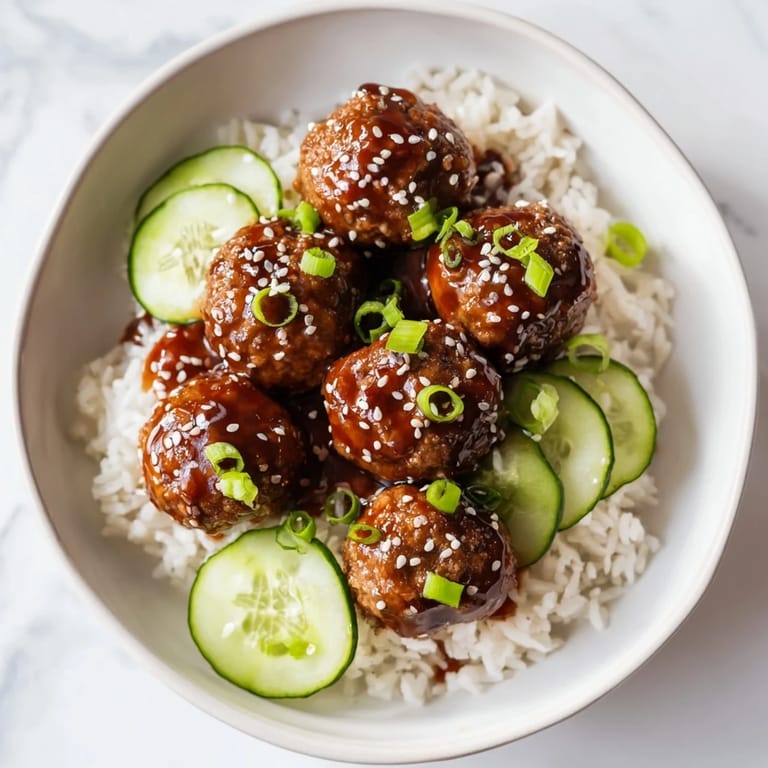
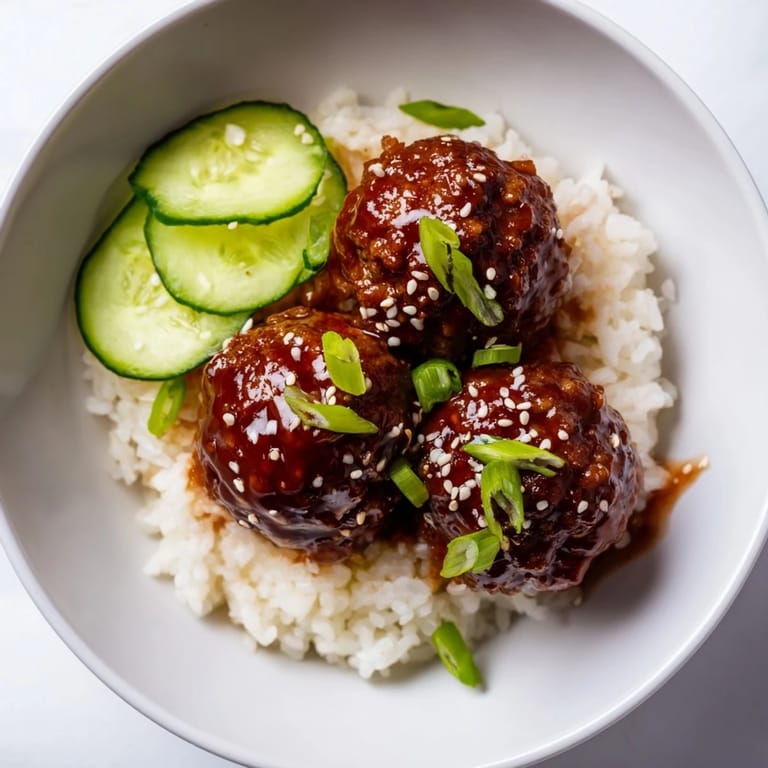
- Divide the rice among four bowls, top with meatballs and sauce, then scatter cucumber slices, sesame seeds, and fresh spring onions over everything. The cool vegetables and warm rice make each spoonful interesting.
 Pin it
 The first time someone asked for seconds, I realized this dish had crossed some invisible line from easy weeknight meal to something people genuinely craved. There's comfort in that, in knowing you've made something simple enough to throw together but special enough that people remember it.
Why the Glaze Makes All the Difference
A plain meatball is just ground meat shaped into a ball, but the moment you coat it in teriyaki, it becomes something else entirely. The soy and mirin carry the umami deep into the meat while the honey and brown sugar create that sticky exterior that caramelizes slightly and catches light. I learned this the hard way by once trying to skip the glaze and serve the meatballs plain—technically edible, completely forgettable. The glaze is where the magic lives, and it's so simple that once you've made it, you'll find excuses to use it on vegetables and rice too.
The Cucumber Question
Fresh, crisp cucumber might seem like an afterthought, but it's actually essential balance. The teriyaki sauce is rich and sweet, and without that cool, light contrast, the bowl starts to feel heavy and one-dimensional. Slice it thin so it stays refreshing, and add it just before serving so it doesn't absorb sauce and go soggy. I've tried heating it, pickling it, even grilling it, and nothing beats it raw and cold against the warm bowl.
Variations and Add-Ons
This recipe is flexible without losing its character. Ground turkey or pork work beautifully and shift the flavor in subtle ways—turkey feels leaner, pork richer. If you want vegetables mixed in rather than just as garnish, steam some broccoli or edamame and nestle them into the bowl. Pickled ginger adds a sharp note that cuts through richness, and a small drizzle of extra sesame oil over the top turns it into something restaurant-level.
- For a gluten-free version, use tamari instead of regular soy sauce and swap panko for gluten-free breadcrumbs—the result is nearly identical.
- Double the glaze and use it to coat roasted vegetables or tofu if you want to feed vegetarians without making them feel like an afterthought.
- Leftover meatballs and sauce keep for three days in the fridge, and reheating them gently in a warm pan brings back the glaze's shine.
 Pin it
 There's something deeply satisfying about putting a beautiful bowl in front of someone and watching their face light up. This dish does that every single time.
Common Questions
- → Can I use a different meat for the meatballs?
Yes, ground turkey or pork can be used as alternatives to beef or chicken while maintaining the recipe's flavor balance.
- → How do I make the teriyaki sauce thicker?
Mix cornstarch with water to create a slurry, then simmer it with the sauce until it thickens to a glossy consistency.
- → What type of rice works best for this dish?
Jasmine or sushi rice are ideal choices due to their texture and mild flavor, complementing the meatballs and sauce perfectly.
- → Are there gluten-free alternatives for this dish?
Using tamari instead of soy sauce and gluten-free breadcrumbs allows for a gluten-free version without compromising taste.
- → Can I add vegetables to the bowls?
Yes, steamed broccoli, edamame, or pickled ginger can be added for extra nutrition and flavor variety.