 Pin it
 I discovered this dish completely by accident on a July afternoon when my farmer's market basket held far more strawberries than I could reasonably eat fresh. Standing in my kitchen surrounded by pints of ruby-red berries, I wondered what would happen if I cooked them down like a sauce instead of relegating them to desserts and jams. The moment sour cream swirled into that warm strawberry mixture, something clicked—tart, creamy, bright, and entirely unexpected. My pasta suddenly tasted like summer itself.
The first time I made this for friends, I almost didn't serve it—the whole concept felt too risky, too weird. But my neighbor had just brought over a basket of her homegrown strawberries, and I was committed to using them creatively. When everyone went quiet after that first forkful, then immediately asked for seconds, I realized I'd stumbled onto something worth keeping. Now every early summer, someone mentions those pink pasta nights.
Ingredients
- Farfalle or penne pasta (12 oz): The shape matters here—bowties and tubes catch and hold the sauce in their ridges, letting you taste the strawberry cream in every bite rather than having it slip off smooth pasta.
- Fresh strawberries (2 cups, hulled and sliced): Ripe ones are essential; underripe berries turn acidic and thin, while perfectly ripe berries release a thick, jammy syrup that coats the pasta beautifully.
- Granulated sugar (2 tbsp): This draws out the strawberry juices and balances their natural tartness without making the sauce taste like dessert.
- Fresh lemon juice and zest (1 tbsp juice, 1 tsp zest): Lemon brightness keeps the strawberries from feeling cloying and cuts through the sour cream's richness with unexpected clarity.
- Salt and freshly ground black pepper (1/4 tsp each): These tiny amounts season the strawberries themselves, intensifying their flavor before the sour cream joins in.
- Full-fat sour cream (3/4 cup): Full-fat is non-negotiable—anything lighter feels thin and breaks easily when you stir it into warm sauce, while full-fat stays silky and luxurious.
- Fresh basil leaves (1/4 cup, thinly sliced): Basil's anise-like notes echo something floral in the strawberries and prevent the dish from tasting heavy or one-dimensional.
- Toasted pine nuts (2 tbsp, optional): They add a buttery crunch that makes each forkful feel more intentional and luxe, though the dish is perfectly lovely without them.
Tired of Takeout? 🥡
Get 10 meals you can make faster than delivery arrives. Seriously.
One email. No spam. Unsubscribe anytime.
Instructions
- Boil the pasta water:
- Fill a large pot with cold water, add a generous handful of salt (it should taste like the sea), and bring it to a rolling boil—you need enough water to let the pasta swim freely. The salt seasons the pasta as it cooks, building flavor from the inside out.
- Cook the pasta to al dente:
- Add pasta and stir immediately so it doesn't clump. Follow package timing but taste a minute before it suggests you're done—al dente means the pasta still has a gentle resistance when you bite it, never mushy. Before draining, scoop out and set aside 1/2 cup of the starchy cooking water; you'll use this to loosen the sauce later if needed.
- Warm the strawberries:
- While the pasta cooks, combine sliced strawberries, sugar, lemon juice, zest, salt, and pepper in a medium saucepan over medium heat. Stir gently every couple of minutes and listen for the first soft hiss—after about 5–7 minutes, the berries will begin breaking down and releasing their juices, but you want them to stay recognizable, not turn into jam.
- Fold in the sour cream:
- Take the pan off heat and let it cool for 2–3 minutes so the sour cream doesn't curdle when you fold it in. Use a spatula to gently combine the sour cream with the warm strawberry mixture, stirring until the color shifts to a soft pink throughout. Taste it and adjust the seasoning—sometimes a pinch more salt or lemon makes it sing.
- Toss everything together:
- Add the drained pasta to the saucepan and toss gently, using a wooden spoon or spatula to coat every strand with the sauce. If it feels too thick, add the reserved pasta water a tablespoon at a time until the sauce clings to the pasta without looking slick or separated.
- Plate and serve:
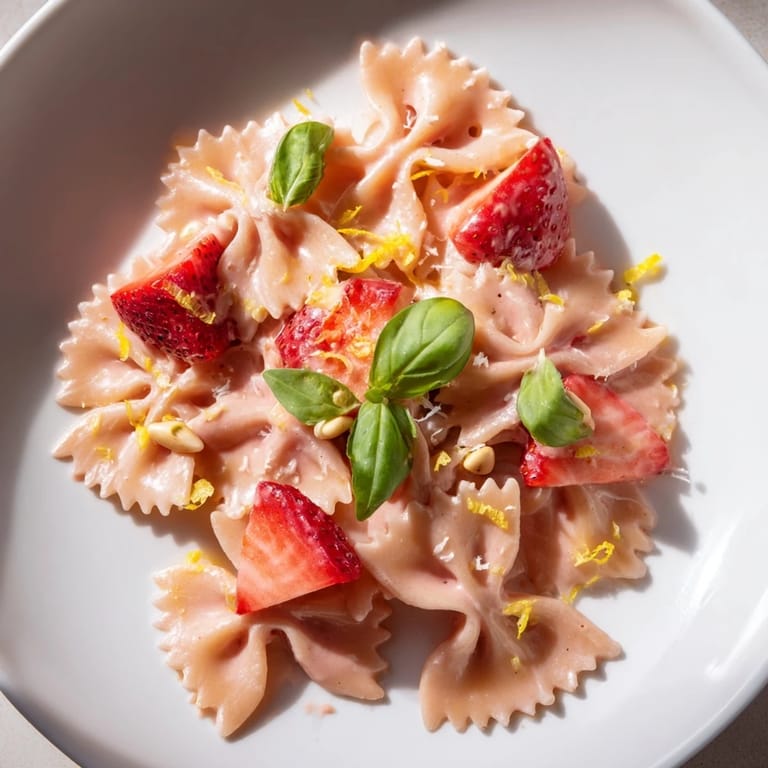
- Divide the pasta among bowls or plates while everything is still warm, so the sauce flows slightly. Top each serving with a scatter of fresh basil, a small handful of pine nuts if you're using them, and a few extra strawberry slices for visual softness and a fresh burst of flavor on the finish.
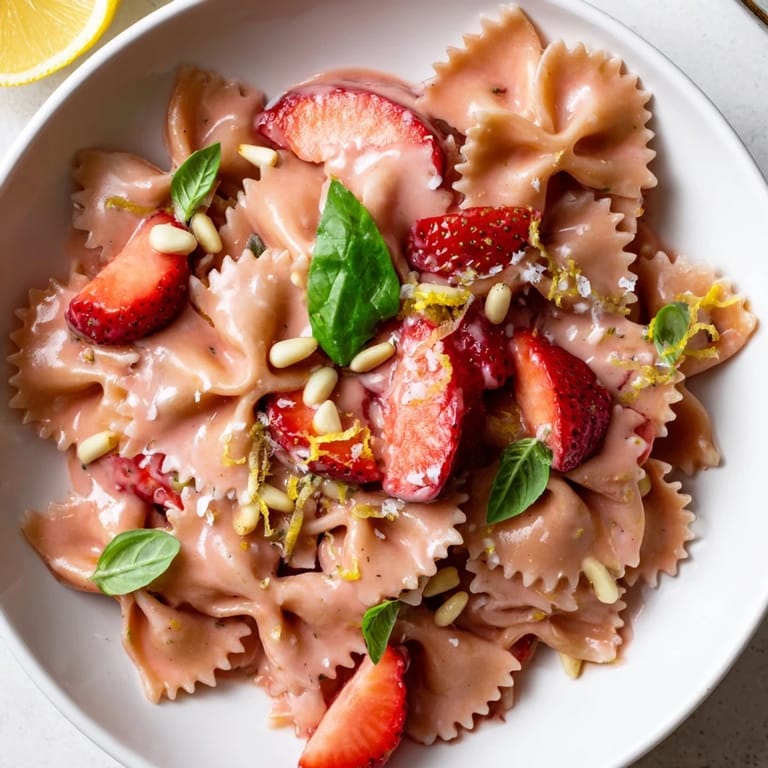 Pin it
 I'll always remember one evening when my usually skeptical father asked for thirds without saying anything, just quietly gesturing at the pot. That's when I knew this recipe had crossed from novelty into something genuinely loved, something that changed the way he thought about what pasta could be.
The Magic of Unexpected Flavor Pairings
This dish works because it doesn't fight itself—strawberries and sour cream have a natural affinity, the kind you find when you stop thinking about traditional flavor rules and start tasting what's actually in front of you. The lemon zest wakes up both components, preventing the sauce from feeling heavy or one-note, while the basil adds an herbal whisper that keeps everything tasting bright and summery rather than heavy or dessert-like. When people taste this, they're confused for a moment, then delighted, because it tastes both comforting and thrilling at the same time.
Adapting It to Your Taste
One friend swore by adding a tiny pinch of chili flakes for a subtle heat that made the strawberries taste even more like themselves, while another preferred swapping sour cream for ricotta for a lighter, almost whipped texture. A vegan version I made with cashew cream once was unexpectedly smooth and delicate, though the sour cream version stays my favorite because of its slight tang. The point is you can play with this recipe—it's forgiving and wants to become whatever your kitchen and pantry suggest.
Serving and Wine Pairings
This pasta calls for a wine that matches its brightness and slight sweetness without being heavy—a crisp, dry rosé feels like the obvious choice, but a chilled Sauvignon Blanc works beautifully too, cutting through the cream with its herbal acidity. Serve the pasta while it's still warm so the sauce flows slightly on the plate, and eat it fairly soon after plating because the strawberries gradually release more juice and can thin the sauce over time. If you're cooking for guests, you can have everything prepped and ready to toss together just before serving, making this feel far more effortless than its deliciousness deserves.
- Pair with a crisp white or dry rosé that echoes the strawberry's natural sweetness.
- Make sure to taste your strawberries before committing—perfectly ripe ones make all the difference in how the sauce tastes.
- Reserve that pasta water without fail; it's the tiny secret that makes the final dish feel polished and complete.
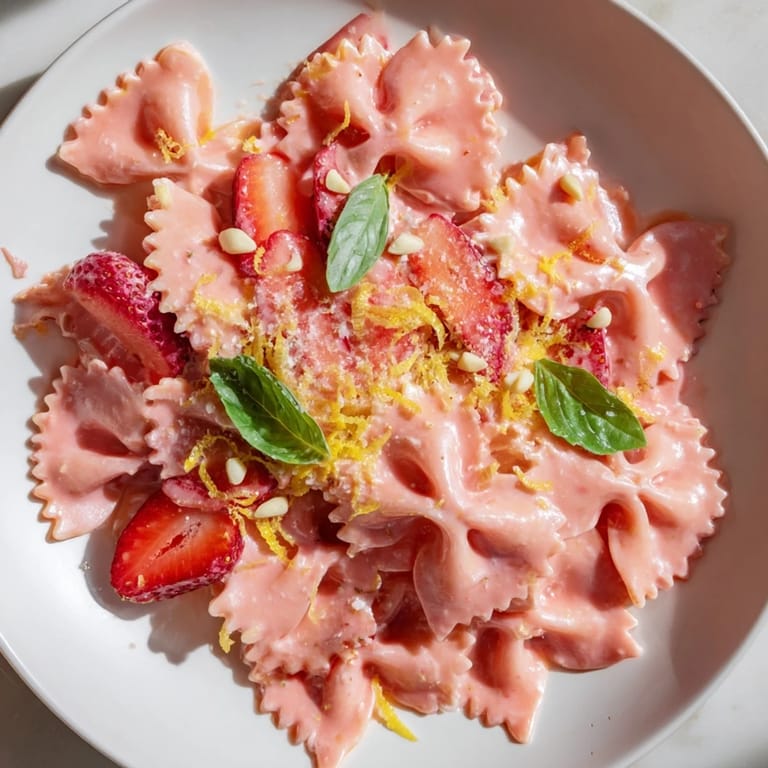 Pin it
 This recipe taught me that the best dishes often come from happy accidents and the willingness to trust your instincts in the kitchen. Make it once, and I think you'll find yourself craving it again every summer.
Common Questions
- → What pasta works best with this dish?
Farfalle or penne work well because their shapes hold the creamy strawberry sauce, ensuring each bite is flavorful.
- → How can I adjust the sauce consistency?
Use reserved pasta water a tablespoon at a time to thin the sauce until it reaches your desired creaminess and coating.
- → Can I prepare this dish vegan?
Yes, substitute the sour cream with a plant-based alternative to maintain the creamy texture while keeping it dairy-free.
- → What herbs complement this pasta?
Fresh basil adds a fragrant, slightly sweet herbal note that balances the sweet and tangy strawberry sauce nicely.
- → Are pine nuts necessary for the dish?
They’re optional but add a delightful crunch and subtle nutty flavor that enhances the overall texture and taste.
- → How do lemon juice and zest affect the flavor?
They provide bright acidity and freshness that cut through the creaminess, lifting the sauce’s overall flavor profile.