 Pin it
 I'll never forget the first time I put together a proper appetizer platter for friends. It was a Saturday evening, and I wanted something that would spark conversation and excitement the moment everyone arrived. That's when I discovered the magic of building a platter around heat—not just the spice, but the visual drama of it. The Spicy Hot Take Platter became my signature move, a way to say "I know you like adventure" without saying a word. It's become the centerpiece of every gathering since, a bold statement that good food should make you feel something.
The first time I served this was at a dinner party where everyone was supposed to bring something, and I decided to be the wild card with this platter. My friend Marcus, who claims he doesn't like spicy food, ended up piling those chili flakes onto everything. By the end of the night, he was asking for the recipe. That's when I realized this platter does something special—it gives people permission to explore flavors they might not usually try, all in a relaxed, no-pressure way.
Ingredients
- Chili flakes: This is the bold statement at the center of everything. I learned the hard way that the quality matters here—cheaper brands taste dusty. Splurge a little on good flakes, whether you go mild or hot. They're the conversation starter that makes people lean in and ask what they're tasting.
- Fresh red chili peppers: These add life and beauty that dried flakes can't quite deliver. The seeds pack the real heat, so include them if your crowd likes danger, or remove them for something more approachable. Slicing them thin means they distribute the flavor without overwhelming any single bite.
- Fresh jalapeño: This one's for color and a softer kind of heat. It's the bridge ingredient for people who aren't quite ready to commit to the full spicy experience but want to feel brave.
- Sharp cheddar cheese: The sharpness cuts through the richness and stands up to the heat. I cube it rather than slice it because people seem to grab more that way—there's something about the texture that works.
- Pepper jack cheese: This brings its own heat and a creamy texture that balances the sharper cheddar. It's what convinced me that this platter could be a complete flavor experience, not just a vehicle for spice.
- Feta cheese: The tang here is essential. It's like the feta knows it's supposed to cut through richness and spice, so it does the job with confidence. Crumbled, it spreads easily across crackers.
- Spicy chorizo: If you're keeping the meat version, this is non-negotiable. It already has its own heat and flavor, so it doesn't need anything else. Slice it thin enough to lay on a cracker without overpowering it.
- Soppressata: The milder, fancier sibling to chorizo. Together they create a range of spice and texture that makes the platter feel sophisticated without being pretentious.
- Cherry tomatoes: These add brightness and a little sweetness. Halving them instead of leaving them whole makes them easier to eat with one hand, which matters more than you'd think at a party.
- Red bell pepper: The sweetness here is crucial—it's your gentle voice in a bold conversation. The strips make for natural vessels to carry hummus or spread.
- Cucumber: Cool and crisp, this one's the palate cleanser. I slice mine thin enough to bend slightly without breaking, which somehow makes them more appealing.
- Radishes: They bring a peppery bite that echoes the central spice theme without competing. Their crunch is almost unmatched among vegetables.
- Spicy hummus: This is your sophisticated dip, the one that makes everything feel intentional. Make sure it actually has some kick to it, or it'll feel like you forgot the theme of your own platter.
- Roasted red pepper spread: Smooth, sweet, and slightly smoky. This is the one people reach for when the spice is feeling like too much, and that's perfectly okay.
- Pita chips: The vehicle that carries everything to your mouth. Sturdy enough to hold weight, flavorful enough to not disappear behind bigger flavors.
- Multigrain crackers: These add texture variety and appeal to people who want something less oily than pita chips. They're also the foundation for the feta and spreads.
- Vegetable sticks: Carrots and celery are here for crunch and to make the platter feel balanced. They're also the thing people reach for when they need a break from intensity.
Tired of Takeout? 🥡
Get 10 meals you can make faster than delivery arrives. Seriously.
One email. No spam. Unsubscribe anytime.
Instructions
- Build Your Central Spice Core:
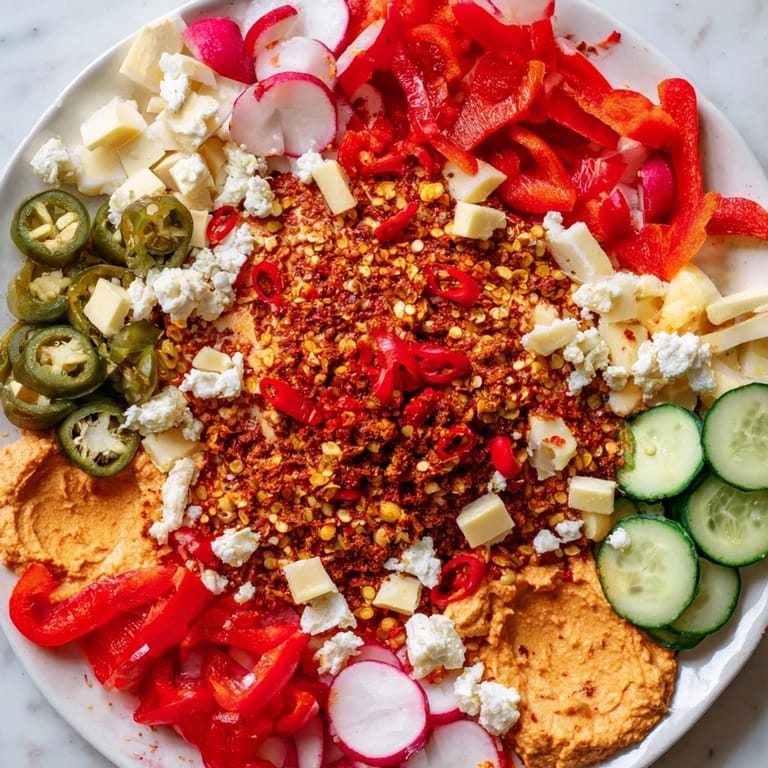
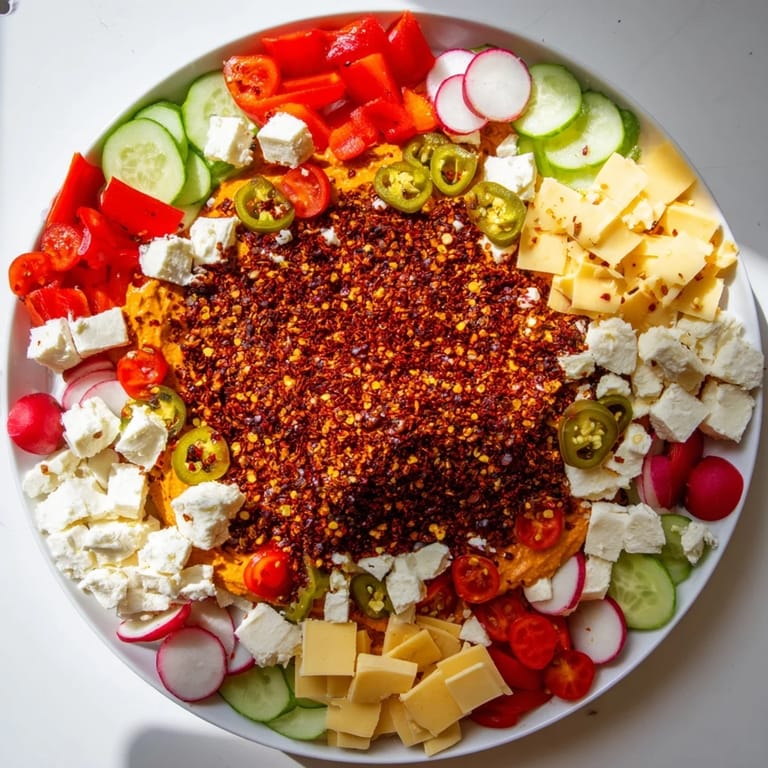
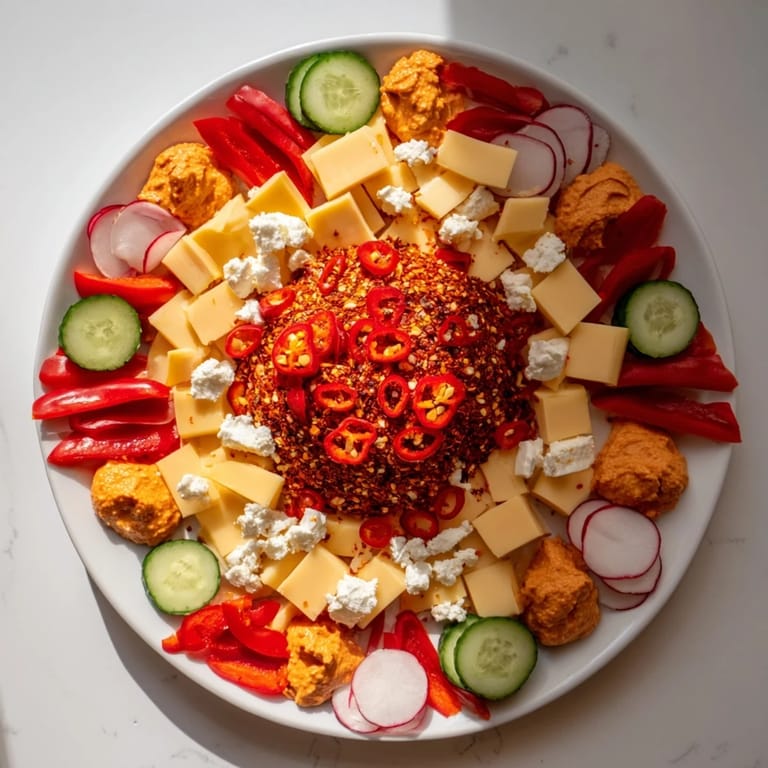
- Take a small bowl or just use the center of your platter as your canvas. Pour the chili flakes into the center like you're creating a volcano. Arrange the sliced fresh chili peppers and jalapeño around and through the flakes in a way that looks intentional and striking. This is your moment to be an artist. Take a step back and make sure it looks like the main event, because it is.
- Arrange the Outer Rings:
- Now comes the choreography. Start with your cheeses in organized sections radiating outward from that spicy center—think of the platter like a color wheel where each section has a purpose. Sharp cheddar in one section, pepper jack in another, feta in its own space. Leave a little breathing room between sections because a cluttered platter feels chaotic, not exciting.
- Add the Proteins (If Using):
- The cured meats go next, laid in overlapping lines that suggest abundance without looking messy. Chorizo in one arc, soppressata in another. Position them so they're easy to grab but also look like they belong to the visual story you're telling.
- Fill In with Fresh Vegetables:
- The vegetables are your color and freshness. Cherry tomatoes catch the light and draw the eye. Bell pepper strips create natural lines that guide people around the platter. Cucumber and radishes fill gaps and add contrast. Step back again—you should feel like you're looking at something that belongs in a magazine.
- Position Your Dips:
- Find two small bowls or use small dishes if you have them. Position them strategically between sections of the platter so people don't have to reach across everything. The dips are anchors that help people navigate the journey around the platter.
- Scatter the Crunchy Foundations:
- Pita chips, crackers, and vegetable sticks fill the remaining spaces. Arrange them in loose groupings, not scattered randomly. They should feel abundant but intentional, like you placed each one knowing exactly what it was going to carry.
- Serve with Confidence:
- Put this platter in the center of your table and watch what happens. The beauty of it is that people will naturally start combining ingredients, discovering their own favorite combinations. You've given them permission to explore, and that's the whole point.
 Pin it
 There was this moment at a dinner party when my friend's eight-year-old daughter asked why we kept the hot stuff in the middle. My friend started to explain, but the daughter just shrugged and said, "So you can be as brave as you want to be." That's exactly it. This platter isn't about forcing spice on anyone—it's about letting people decide their own level of adventure. That stuck with me.
Why This Works as a Centerpiece
Platters like this work because they're interactive without being complicated. There's no assembly required from your guests, but there's plenty of room for them to make it their own. Everyone finds their own path through the flavors, and somehow that creates better conversation than a plated appetizer ever could. Plus, it gives people something to do with their hands while they're talking, which makes everyone feel more relaxed.
The Spice Progression Story
What I love about this platter is that it tells a story about heat and flavor that unfolds as people make their choices. Start with the milder dips and sweet peppers, move into the cheeses, and then decide if you want to flirt with the chili flakes. Some people skip straight to the center, and that's their story to tell. The point is that everyone gets to write their own experience, and that's when food becomes memorable.
Making It Work for Everyone
I've learned that the best platters are the ones that work for the broadest range of people without losing their character. This one achieves that by letting the spice be optional and making sure every other element is genuinely delicious on its own. A generous spread of mild cheese is just as satisfying as one loaded with chili flakes, and that's exactly how it should be.
- If you're feeding a crowd with mixed spice tolerance, make sure your dips are mild but still flavorful—the heat in the center won't bother anyone if the supporting players are appealing enough
- Consider doing a vegetarian version and a version with cured meats side by side if your guest list is mixed, or just go fully vegetarian because honestly, everything here works beautifully without the meat
- Keep extra cheese and vegetables in the kitchen so you can top up the platter once people have grazed through the first pass—nothing says "welcome" like a platter that seems to replenish itself
 Pin it
 This platter has become my answer to the question "what should I bring?" because it works for almost every occasion and never fails to impress. It's proof that simple ingredients, thoughtfully arranged, can create something that feels both generous and exciting.
Common Questions
- → How can I adjust the spice level?
Use milder chili flakes or omit seeds in fresh peppers to lower heat. For extra spice, choose hotter chili varieties or add pickled jalapeños and spicy olives.
- → Can this platter be made vegan?
Yes, substitute cheeses and meats with plant-based alternatives to create a vegan-friendly option.
- → What are good accompaniments for serving?
This spicy platter pairs well with crisp white wines or light beers, enhancing the bold flavors.
- → How should the platter be arranged?
Place the spicy chili flakes and peppers as a central mound, then surround with cheeses, meats, fresh vegetables, dips, and crunchy sides in radiating sections.
- → What are common allergens in this platter?
The platter contains dairy from cheeses, gluten from crackers and pita chips, and possible nuts in dips; check labels accordingly.