 Pin it
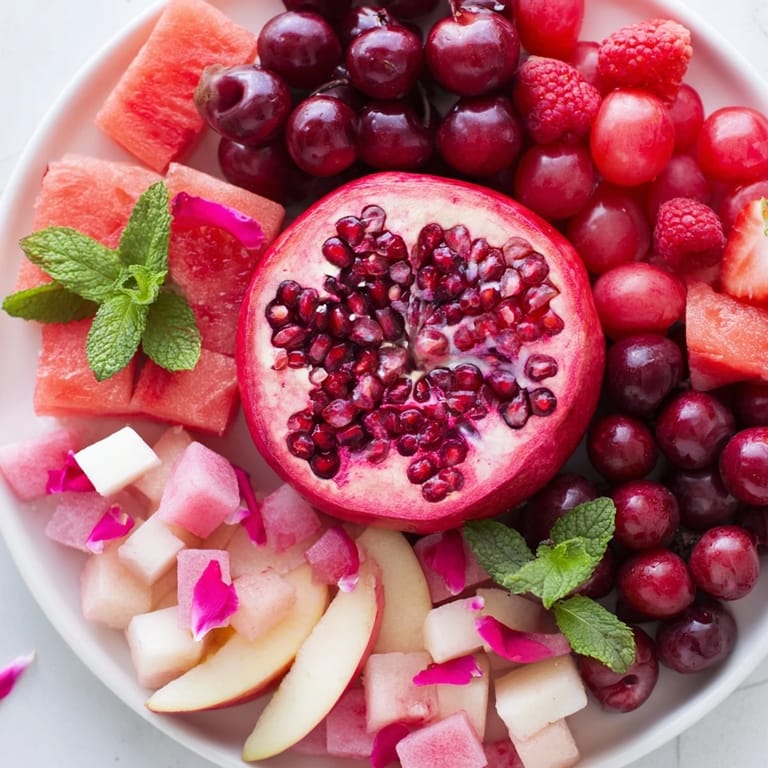
 I discovered this arrangement trick at a farmer's market in late summer when I was overwhelmed by the sheer variety of berries and stone fruits available. A vendor casually suggested arranging them by color gradient, and something clicked—what if I made the color transition itself the centerpiece? A halved pomegranate became my focal point, its jewel-toned arils practically glowing. That single suggestion transformed how I think about plating fruit, turning what could have been a simple bowl into something that stopped conversations.
I made this for a friend's birthday brunch one June morning, and watching everyone reach for it before anything else was quietly thrilling. There's something about arranging fruits in color order that feels almost meditative, and I realized halfway through that I wasn't stressed about timing or technique—just present with each fruit, noticing its particular hue and texture. That shift in feeling made the whole process feel less like cooking and more like creating something collaborative.
Ingredients
- 1 large pomegranate, halved: This is your anchor, your reason for the whole arrangement—the vibrant seeds catch light and remind people why they love this fruit in the first place.
- Dark cherries (1 cup, pitted): Their deep burgundy creates the richest color note; pit them ahead of time so you're not wrestling with small fruits while you're trying to arrange.
- Red grapes (1 cup): They hold their shape beautifully and provide natural glossiness that photographs well, though honestly they taste better than they look.
- Strawberries (1 cup, hulled): Cut them fresh just before arranging so they don't weep; their natural geometry makes placement almost meditative.
- Raspberries (1 cup): These bridge the gap between deep red and pink, and their delicate structure means handle them gently and arrange them last.
- Watermelon (1 cup, cubed): The palest pink cubes create unexpected visual interest and provide juicy relief between sweeter fruits.
- Pink grapefruit segments (1 cup): Their rosy hue and slight bitterness add complexity; membrane them carefully for clean presentation.
- Dragon fruit (1 cup, cubed): The pale pink flesh is subtle and slightly sweet, and their geometric shape helps maintain the arrangement's structure.
- Apple slices (1 cup, pink or blush varieties): Slice these moments before serving and have a bowl of water with lemon juice ready to prevent browning.
- Pear slices (1 cup): Their creamy texture contrasts beautifully with crisp grapes, though they oxidize quickly so plan accordingly.
- Fresh mint and edible rose petals (optional): These transform the platter from beautiful to memorable; add them just before serving so they stay perky.
Tired of Takeout? 🥡
Get 10 meals you can make faster than delivery arrives. Seriously.
One email. No spam. Unsubscribe anytime.
Instructions
- Position Your Anchor:
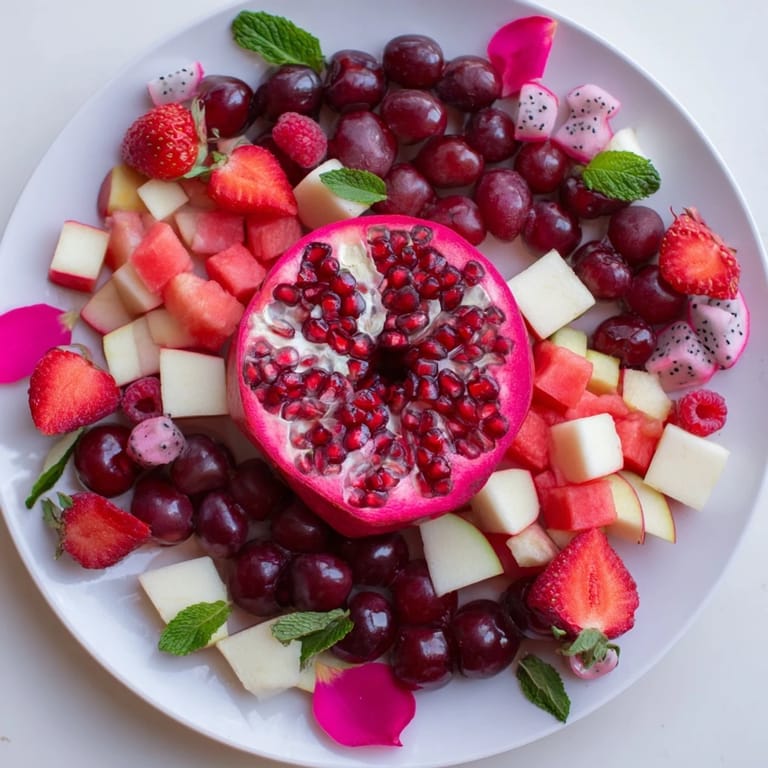
- Place the halved pomegranate cut-side-up dead center on a large serving platter—you want it sitting proudly like it owns the moment. The seeds should be facing up so they catch light and draw every eye immediately.
- Build the Deep Red Ring:
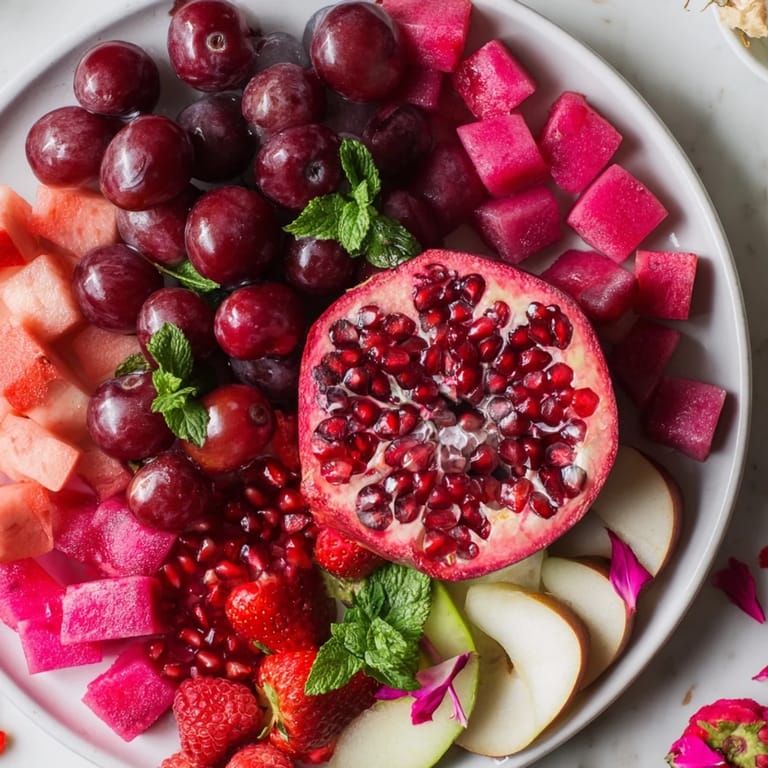
- Arrange your darkest fruits (pitted cherries, red grapes, hulled strawberries) in a generous crescent around the pomegranate, letting them nestle close but not touching. Think of it as creating a frame, and trust that slight overlapping looks intentional and lush.
- Transition Into Pink:
- Layer raspberries, watermelon cubes, and grapefruit segments in the next ring outward, so the color shifts from burgundy to rose to blush. This is where the magic happens—watch how the eye naturally follows the gradient.
- Fade to Pale:
- Fill the outer edge with dragon fruit, apple slices, and pear slices, creating that final subtle transition to nearly-white. The gradation should feel organic, like colors are melting into each other rather than stopping abruptly.
- Garnish With Intention:
- Scatter fresh mint leaves and edible rose petals across the arrangement just before serving, tucking them into natural gaps where they catch light. This step isn't decoration—it's the final note that tells people you've thought about every detail.
- Serve Fresh or Chill:
- Bring it to the table immediately if you want maximum crispness, or cover loosely and refrigerate until guests arrive. Either way, present it before the apple starts to brown.
 Pin it
 A guest at that brunch asked me if I'd gone to culinary school, and I laughed—all I'd done was listen to someone talk about color, then trust that nature already knows how to be beautiful. That comment stayed with me because it reminded me that sometimes the most impressive things come from paying attention rather than technique.
Why Color Gradients Matter
Color is flavor's first impression, and when fruits transition gradually from deep to pale, people unconsciously expect their taste to shift too—even though both cherry and pear are fundamentally sweet. This psychological layering creates a narrative arc across the platter, making each bite feel like part of a story rather than a random grab. It's why this arrangement stays in memory longer than a fruit bowl ever could.
Substitutions and Seasonality
This platter thrives on whatever's at peak ripeness—summer allows for cherries and stone fruits, while winter might shift toward pomegranate seeds, kiwi, and persimmons. Red currants create the most intense color notes if you find them, and lychees add unexpected textural contrast. The framework stays the same; only the specific fruits evolve with the season, which means you can return to this arrangement year-round without it ever feeling stale.
The Presentation Philosophy
Fruit platters feel like luxury because they're straightforward but intentional—no hidden techniques, no stress about cooking times, just clarity about what you're serving and why it matters. This particular arrangement works because it respects the fruit itself rather than trying to hide or transform it.
- Overlap slightly rather than leaving gaps, which creates visual richness and makes the platter look abundant.
- Keep the pomegranate seeds intact if possible; cracked arils bleed juice and lose their visual punch.
- Chill your platter for fifteen minutes before arranging if you have time—cold fruit holds its shape better and stays fresher longer.
 Pin it
 The beauty of this platter is that it demands nothing from you but attention and intentionality. Serve it knowing you've created something that tastes like thoughtfulness, which is the best kind of hospitality.
Common Questions
- → How should the fruits be arranged for best presentation?
Arrange fruits in overlapping layers transitioning from deep red near the pomegranate to pale pinks at the edges for a smooth color gradient.
- → Can I substitute any fruits based on availability?
Yes, seasonal substitutions like red currants, pomegranate seeds, lychees, or peaches work well while maintaining color balance.
- → How can I prevent apple and pear slices from browning?
Lightly drizzle lime juice over apple and pear slices to keep them fresh and prevent oxidation.
- → Is it necessary to chill the platter before serving?
Serving immediately is ideal, but covering and refrigerating the platter keeps fruits fresh and cool if prepared in advance.
- → What garnishes enhance flavor and aroma?
Fresh mint leaves and edible rose petals provide an attractive aroma and visual contrast without overpowering the fruit flavors.