 Pin it
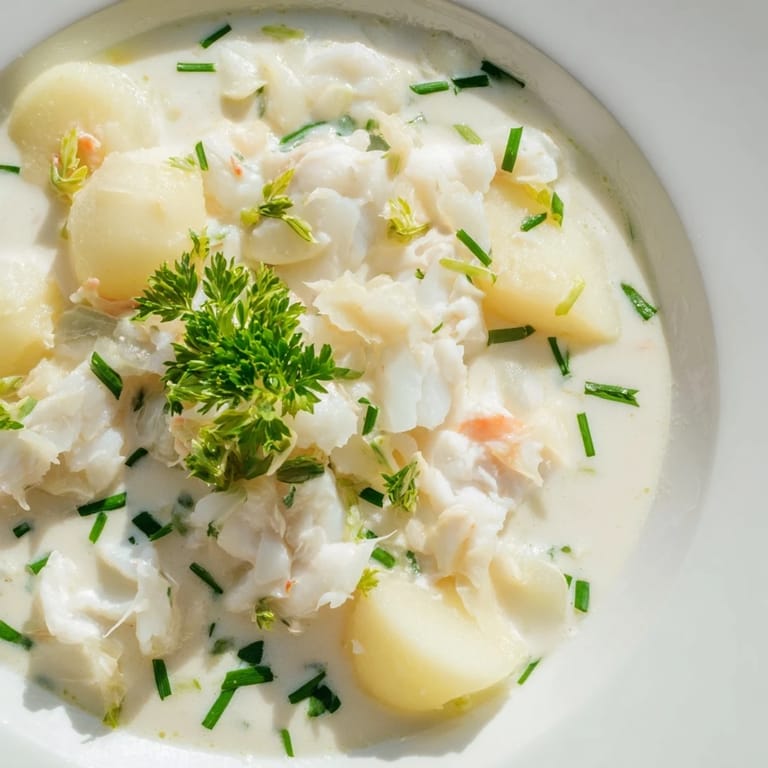
 There's something about a bowl of creamy fish stew that makes you feel wrapped in warmth, especially when the wind is rattling your windows and the day feels too cold for anything else. I discovered this Icelandic version years ago during a chance conversation with someone who'd grown up in Reykjavik, and they described it with such genuine comfort that I had to try making it. The first time I stirred together that silky cream with flakes of tender cod, I understood why it's such a staple there—it's the kind of food that feels like home, whether or not Iceland is actually your home.
I made this for my parents on a rainy Sunday, and my dad—who usually complains that everything I cook is too fancy—went back for seconds without saying a word about it. That silence, followed by a quiet 'this is really good,' felt like winning an award. By the time we finished eating, we were all sitting back with full bellies and that satisfied, drowsy feeling that only comes from genuinely nourishing food.
Ingredients
- Cod or haddock fillets (500 g): White fish is key here because it stays tender and flakes apart naturally—avoid anything too thick or oily.
- Butter (60 g): The foundation of flavor; it should be real butter, not a substitute, because this broth relies on that richness.
- Whole milk (500 ml): Use fresh milk, not the ultra-pasteurized kind if you can help it, as it creates a smoother, less grainy texture.
- Heavy cream (100 ml): This is what transforms the stew from simple to silky—use the real stuff, and don't skip it unless you really must.
- Potatoes (500 g): Waxy potatoes hold their shape better than floury ones, so seek those out if you're particular about texture.
- Onion (1 medium): One onion is enough; it should soften completely and almost disappear into the broth.
- Fresh parsley and chives: These are your finishing touch—they bring brightness that cuts through the richness and shouldn't be omitted.
- Bay leaf, salt, white pepper, and nutmeg: The bay leaf infuses the poaching liquid gently, and the nutmeg—just a whisper of it—rounds everything together.
Tired of Takeout? 🥡
Get 10 meals you can make faster than delivery arrives. Seriously.
One email. No spam. Unsubscribe anytime.
Instructions
- Start the potatoes:
- Dice your potatoes into bite-sized pieces and drop them into salted boiling water—you want them tender but still holding their shape after about 12 to 15 minutes. This timing is important because overcooked potatoes will dissolve into the broth, which some people like but I prefer a bit of texture.
- Poach the fish gently:
- While the potatoes cook, lay your fish fillets in a separate saucepan with just enough water to cover them, toss in a bay leaf and a pinch of salt, then let them simmer very gently for 6 to 8 minutes—you're looking for that moment when the flesh turns opaque and flakes apart with the gentlest nudge. Save that poaching liquid; it's liquid gold.
- Build the base:
- In your large pot, melt butter over medium heat and sauté your chopped onion until it's soft and starting to turn golden—this should take about 5 minutes, and your kitchen will smell incredible. Add the drained potatoes and gently mash them, but leave plenty of chunks so you can actually taste the potato.
- Bring it together:
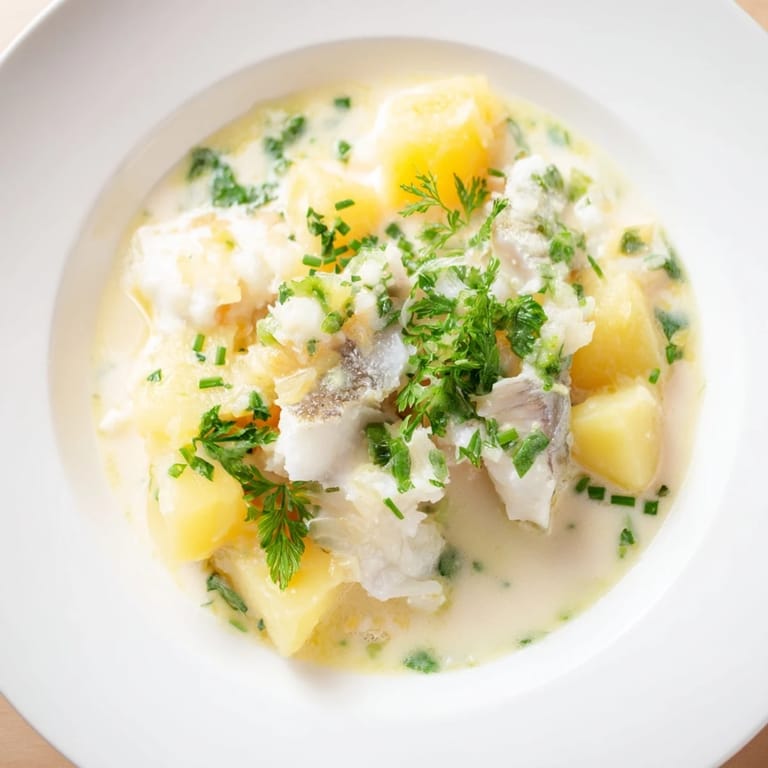
- Flake your cooked fish into generous pieces and add it to the pot along with that reserved poaching liquid, then stir everything together very gently so the fish doesn't break apart further. This is where you're starting to see the finished dish come alive.
- Make it creamy:
- Pour in the milk and cream, keeping the heat low, and stir frequently as it warms through—never let it boil, or the cream can separate and the whole thing loses that silky texture you're after. This should take about 5 to 10 minutes of patient, gentle stirring.
- Season and finish:
- Taste it now, then add salt, white pepper, and just a pinch of nutmeg—this last spice is subtle but essential, rounding out all the flavors. Stir in half the parsley and chives, reserving the rest for garnish so it stays bright and fresh on top.
- Serve with intention:
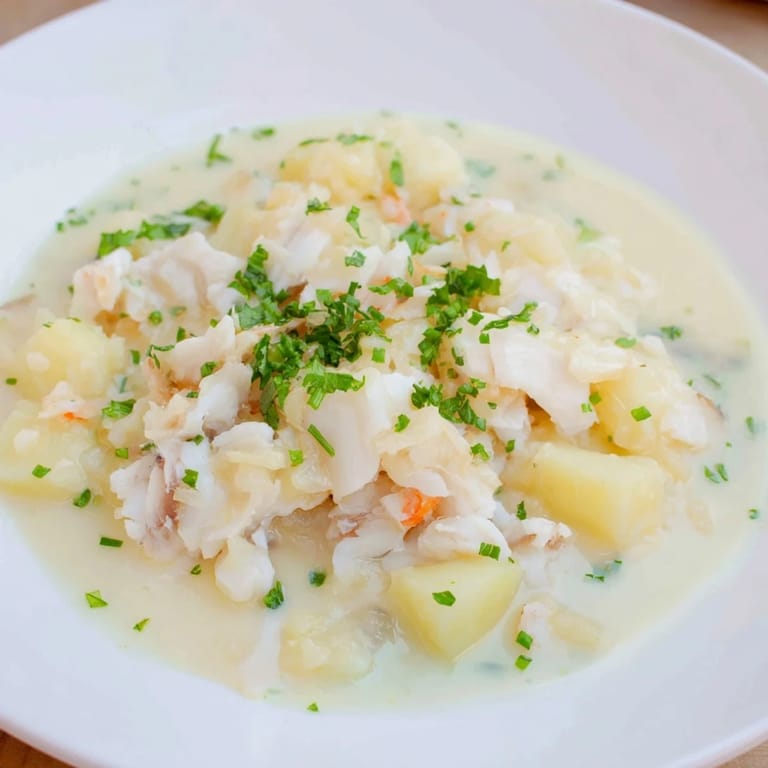
- Ladle it into bowls while it's still steaming, scatter the remaining herbs across the top, and if you have dark rye bread, tear off a piece to crumble into the stew or eat alongside it.
 Pin it
 What struck me most about this dish is how it transforms ordinary ingredients—a piece of fish, some potatoes, cream—into something that feels almost ceremonial to eat. There's a reason this stew has sustained people through long, dark Icelandic winters; it's the kind of meal that settles into you and reminds you that good food doesn't have to be complicated to be profound.
The Secret of Texture
The mashed potatoes are what make this stew special rather than just a creamy fish soup. When you mash them gently in the butter and then let them soften further in the warm broth, they break down just enough to thicken everything naturally while still leaving enough chunks so you can taste them. I learned this the hard way after making a version where I mashed the potatoes too much and ended up with something closer to baby food, which completely missed the mark of what makes this dish satisfying.
Why Icelandic Fish Matters
Icelandic cuisine exists because of what the ocean provides, and fish is at the absolute center of it. This stew respects that heritage by letting the fish be the star rather than hiding it under heavy spices or complicated techniques. The white fish stays mild and delicate, almost neutral, which is exactly what you want when you're building flavors from butter, cream, and gentle herbs. If you can find truly fresh fish—ideally from a fishmonger rather than a supermarket case—the difference in this stew is noticeable and worth the effort.
Variations and Flexibility
This is a recipe that bends without breaking, which is one reason I keep coming back to it. Some days I use only milk and skip the cream entirely, and it's still wonderful—lighter and cleaner-tasting but without that silk on your tongue. Other times I've added smoked fish or a mix of white fish to deepen the flavor, or I've thrown in a handful of diced celery or a parsnip if I have it on hand.
- For a lighter version, replace the cream with extra milk and you'll lose nothing essential.
- Smoked haddock or a combination of different white fish will give you a more complex flavor profile.
- If you're serving this to people who need gluten-free options, just skip the rye bread and let the stew stand on its own.
 Pin it
 There's a reason comfort food is called that, and it's because sometimes we need to eat something that wraps around us like a warm blanket. This Icelandic fish stew does exactly that, and now every time I make it, I think of that conversation that started it all.