 Pin it
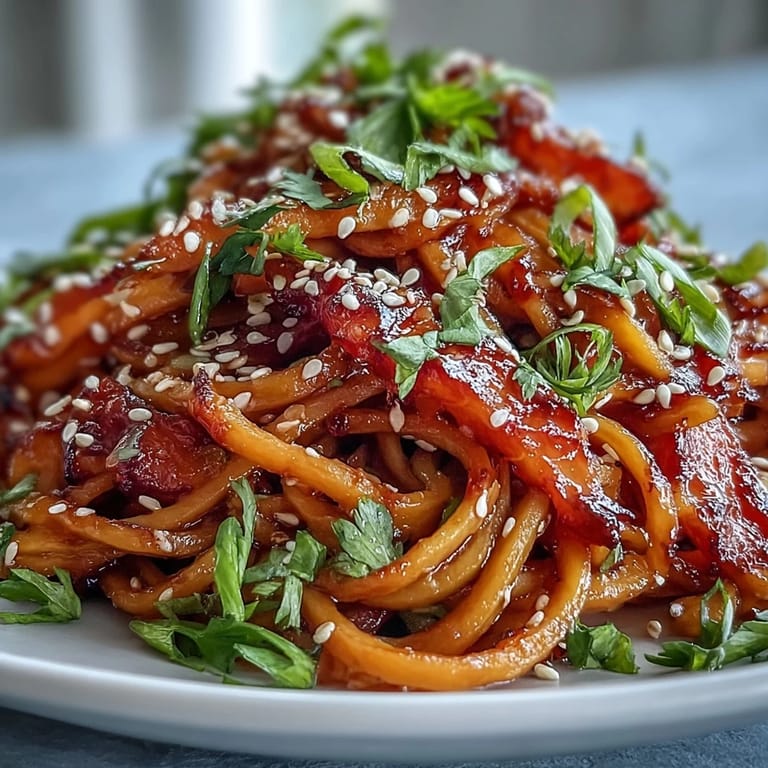
 I was staring at a giant swede one Saturday morning, convinced it was too bland to star in anything. Then I thought about how gochujang transforms everything it touches, that perfect balance of heat and sweetness, and decided to treat the swede like it deserved respect. Roasted until caramelized, tossed with slippery rice noodles and that fiery red dressing, it became something I craved on repeat. Sometimes the most unlikely ingredients surprise you hardest.
The first time I made this for friends, they eyed the swede ribbons with polite confusion until they took a bite. Then it was quiet except for the sound of chopsticks clicking and someone asking for seconds. One friend, who swore she hated rutabaga, scraped her bowl clean and texted me the next day for the recipe. That night taught me that presentation and a killer sauce can flip any vegetable's reputation.
Ingredients
- Swede (rutabaga): Peel it well to remove the waxy skin, then use a vegetable peeler or mandoline to create thin ribbons that roast up tender and sweet with crispy edges.
- Rice noodles: Dried flat rice noodles work beautifully here because they soak up the dressing without getting mushy, and they cook in minutes.
- Gochujang: This Korean chili paste is the soul of the dish, bringing fermented depth, heat, and a slight sweetness that balances everything.
- Maple syrup: It tempers the heat and adds a glossy sweetness that makes the dressing cling to every surface.
- Toasted sesame oil: A little goes a long way, adding that nutty aroma that makes the whole bowl smell like a street market.
- Spring onions: Slice them thin and toss them in raw for a sharp, fresh bite that cuts through the richness.
- Sesame seeds: Toast them until golden and fragrant, they add crunch and a final nutty note on top.
- Fresh cilantro: Optional but highly recommended for a bright, herbal contrast to the spicy dressing.
Tired of Takeout? 🥡
Get 10 meals you can make faster than delivery arrives. Seriously.
One email. No spam. Unsubscribe anytime.
Instructions
- Preheat and prep:
- Set your oven to 220°C (425°F) and let it get properly hot while you peel and ribbon the swede. This high heat is what gives you those caramelized edges.
- Roast the swede:
- Toss the ribbons with vegetable oil, salt, and pepper, then spread them out in a single layer on a baking sheet. Roast for 25 to 30 minutes, flipping halfway through, until they are golden and tender with crispy bits at the edges.
- Cook the noodles:
- While the swede roasts, cook your rice noodles according to the package instructions, then drain and rinse them under cold water to stop the cooking. Set them aside so they do not clump.
- Make the dressing:
- In a bowl, whisk together the gochujang, soy sauce, maple syrup, rice vinegar, sesame oil, garlic, ginger, and chili flakes if using. Add water a tablespoon at a time until it is pourable but still thick enough to coat.
- Toss everything together:
- In a large mixing bowl, combine the roasted swede, noodles, spring onions, carrot, and bean sprouts if using. Pour the dressing over and toss gently but thoroughly until every ribbon and noodle is coated.
- Serve and garnish:
- Divide into bowls and top with toasted sesame seeds and fresh cilantro. Serve immediately while the swede is still warm and the dressing is glossy.
 Pin it
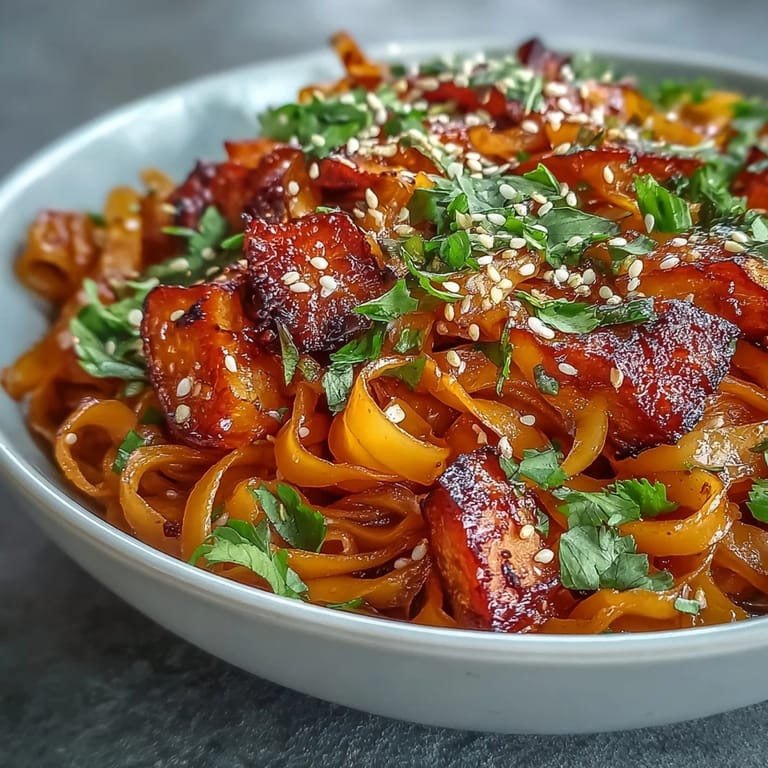
 One evening I made this after a long, gray week and the smell of sesame oil and gochujang filling the kitchen felt like a reset button. I sat on the couch with my bowl, slurping noodles and crunching on sesame seeds, and realized this dish had become my version of comfort food. It is not the recipe I grew up with, but it is the one I reach for when I need something warm, spicy, and completely satisfying.
Storing and Reheating
Leftovers keep well in an airtight container in the fridge for up to three days, and honestly, they taste even better once the dressing has had time to soak into the noodles. I usually eat them cold straight from the fridge, but you can reheat gently in a pan with a splash of water to loosen everything up. The swede softens a bit more, but it still holds its shape and flavor.
Customizing Your Bowl
This recipe is incredibly flexible and welcomes whatever you have on hand. I have added pan-fried tofu, edamame, shredded cabbage, and even leftover roasted sweet potato. If you prefer more crunch, toss in extra bean sprouts or julienned cucumber just before serving. For a richer version, top with a soft-boiled egg or a drizzle of extra sesame oil.
Pairing and Serving Ideas
This dish shines on its own, but it also pairs beautifully with a crisp, slightly sweet Riesling or a light lager that can stand up to the heat. If you are serving it as part of a larger meal, consider adding a simple cucumber salad or some steamed greens on the side. It is also great for meal prep, just keep the dressing separate until you are ready to eat.
- Double the dressing recipe and keep extra in a jar for quick weeknight stir-fries or grain bowls.
- Use a mandoline for perfectly even swede ribbons that roast uniformly.
- If you cannot find swede, try using parsnips or even butternut squash ribbons instead.
 Pin it
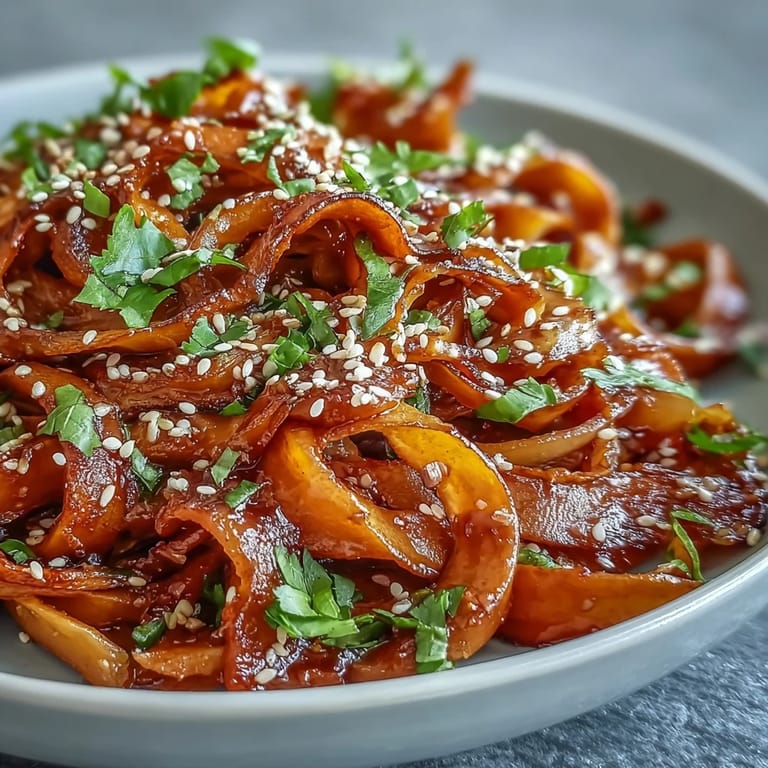
 This dish taught me that bold flavors and humble vegetables belong together, and that sometimes the best meals come from trusting your instincts with what is in the pantry. I hope it becomes one of your go-to recipes when you want something colorful, satisfying, and a little bit unexpected.
Common Questions
- → Can I substitute the swede with another vegetable?
Yes, you can use butternut squash, sweet potato, or even zucchini ribbons. Adjust roasting time based on the vegetable's density - softer vegetables may need only 15-20 minutes.
- → How spicy is this dish?
The spice level is moderate thanks to the gochujang, which provides a balanced heat. You can reduce the amount to 2 tablespoons for milder heat or add extra chili flakes for more kick.
- → Can I make this ahead of time?
The components can be prepped separately - roast the swede and prepare the dressing up to 2 days ahead. Cook noodles fresh and toss everything together just before serving for best texture.
- → What can I use instead of gochujang?
While gochujang provides unique flavor, you can substitute with sriracha mixed with a teaspoon of miso paste, though the taste will differ. Red curry paste is another alternative.
- → How do I make thin swede ribbons?
Use a vegetable peeler for wide ribbons or a mandoline for uniform julienne strips. A sharp knife works too - just slice thinly and cut into matchsticks for consistency.
- → Is this dish gluten-free?
It can be made gluten-free by using tamari instead of soy sauce and ensuring your gochujang brand is certified gluten-free, as some varieties contain wheat.