 Pin it
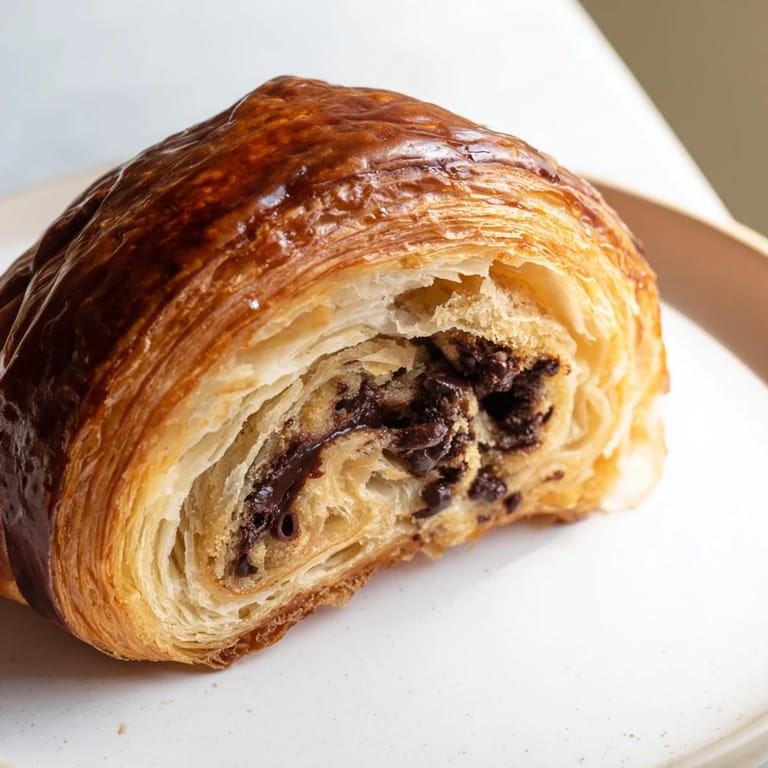
 The first time I attempted a crookie, I was standing in a Parisian café on a gray morning, watching a baker pull a tray from the oven. These weren't on the menu, but the young woman behind the counter noticed my curious stare and handed me one still warm, its edges catching the light like caramelized gold. One bite and I was undone—the snap of laminated layers giving way to pools of melted chocolate and the soft chew of cookie dough underneath. I spent the next three weeks trying to reverse-engineer the impossible hybrid in my kitchen, failing spectacularly twice before understanding that patience with the butter was everything.
I made these for my sister's book club last fall, and she still texts me about them. The kitchen filled with butter-and-yeast steam while women debated plot twists in the living room, and when I set the warm tray down, conversation stopped. Someone asked if they were homemade, and when I nodded, the collective gasp made every awkward fold of dough worth it. My sister bit into one and closed her eyes like she'd just heard good news.
Ingredients
- All-purpose flour (250 g for dough, 120 g for cookie layer): This is your structure—the flour must be measured by weight if you want consistency, especially when laminating, because even a spoonful too much will fight you during the folds.
- Unsalted butter (150 g cold for lamination, 25 g melted for dough, 70 g softened for cookies): Keep the lamination butter genuinely cold—pull it from the fridge moments before you need it—and let the cookie butter come to exactly room temperature so it creams without getting greasy.
- Granulated sugar (30 g for dough, 40 g for cookies) and brown sugar (60 g for cookies): The granulated sugar in the dough keeps layers separate; the brown sugar in the cookies brings moisture and depth that makes them actually taste like cookies.
- Instant yeast (7 g): This small amount is all you need because time does most of the work for you—don't oversaturate with yeast or the lamination will collapse.
- Whole milk, lukewarm (120 ml): Cold milk will chill your butter when you need it active; too hot and you'll kill the yeast—test it on your inner wrist like you're checking a baby's bath.
- Eggs (1 large egg for dough, 1 egg yolk for cookie layer): The whole egg binds the dough; the yolk alone gives cookies richness without making them cakey.
- Dark chocolate chips (100 g): Use chocolate you'd actually eat on its own—the quality difference is audible when someone bites into these.
- Vanilla extract (1 tsp): A small thing that rounds out the cookie flavor so it doesn't taste one-dimensional.
- Baking soda (1/2 tsp) and salt (1/4 tsp per layer): Baking soda needs acid to work, so the brown sugar is essential; salt in both doughs keeps flavors honest.
Tired of Takeout? 🥡
Get 10 meals you can make faster than delivery arrives. Seriously.
One email. No spam. Unsubscribe anytime.
Instructions
- Mix and knead the base dough:
- Combine flour, sugar, salt, and yeast in a bowl, then add your lukewarm milk, melted butter, and egg. You'll have a shaggy mixture that looks uncertain—keep mixing and kneading for five minutes until it becomes smooth and elastic, like it's actually ready for something. The warmth of the milk helps here, so work with purpose.
- Rest and chill the dough:
- Shape it into a rectangle on a clean surface, cover it loosely with plastic wrap, and let it sleep in the fridge for thirty minutes. This isn't laziness; it's making the dough cold and firm so the butter you're about to fold in will actually create those flaky layers.
- Prepare the butter square:
- Roll your cold unsalted butter between two sheets of parchment into a 15 by 15 centimeter square. It should be cold enough to hold its shape but pliable enough to fold without shattering—think of it like leather rather than ice. Chill this square while your dough rests.
- Envelope and fold:
- Roll your cold dough into a 30 by 15 centimeter rectangle, place your butter square in the center, then fold the dough from both short sides over the butter like you're wrapping a gift. Press the edges to seal so the butter stays locked inside during the rolling ahead. Roll the whole package out to 45 by 20 centimeters, then fold it into thirds like a letter—this is your first turn.
- Repeat the turns:
- Chill for thirty minutes between each fold, do this twice more, and you'll have visible layers emerging. Each time you unfold and refold, the butter spreads thinner and creates more separation—this is what makes them croissants in spirit. After your third fold, chill the whole thing for a full hour so the gluten can relax and the butter can set.
- Make the cookie dough:
- Beat softened butter and both sugars until the mixture looks pale and fluffy, about two minutes of real effort. Add your egg yolk and vanilla, then switch to stirring in flour, baking soda, and salt until the dough just comes together—overmixing makes cookies tough, so stop as soon as you can't see dry flour. Fold in chocolate chips gently, cover, and let it chill alongside your laminated dough.
- Assemble with intention:
- Roll your laminated dough into a 30 by 25 centimeter rectangle about six millimeters thick—this thickness matters because too thin means no chew, too thick means gummy centers. Spread or dollop your cookie dough evenly across the surface, leaving a one centimeter border so you can seal it properly when you roll. Roll everything tightly from the long side and use a sharp knife to slice into eight equal pieces; each one should look like a spiral when you see it from above.
- Proof with patience:
- Place your sliced crookies on parchment paper, cover them loosely with plastic wrap or a kitchen towel, and let them rise at room temperature for one hour. You're looking for them to puff slightly and feel a little lighter when you touch the sides—they'll continue rising in the oven, so don't wait for them to double.
- Bake until golden:
- Heat your oven to 190°C (375°F) and slide your baking sheet in. After eighteen to twenty minutes, they should be deep golden on top, with the sides set but still tender. The chocolate will be molten inside, and the edges might caramelize slightly—that's not a mistake, that's the point.
- Cool before you surrender:
- Let them sit on a wire rack for at least five minutes so the structure can set, even though every instinct will pull you toward eating them immediately. When you finally bite into one and the layers shatter and the chocolate melts and the cookie texture emerges, you'll understand why this took three weeks of your life.
 Pin it
 There's a moment halfway through the second fold when you realize you're actually doing something that takes months to master professionally, and you're doing it in your own kitchen with cold hands and flour on your apron. That feeling never gets old. When those crookies come out and someone picks one up still warm, the way their face changes is worth every single fold.
Why This Hybrid Works
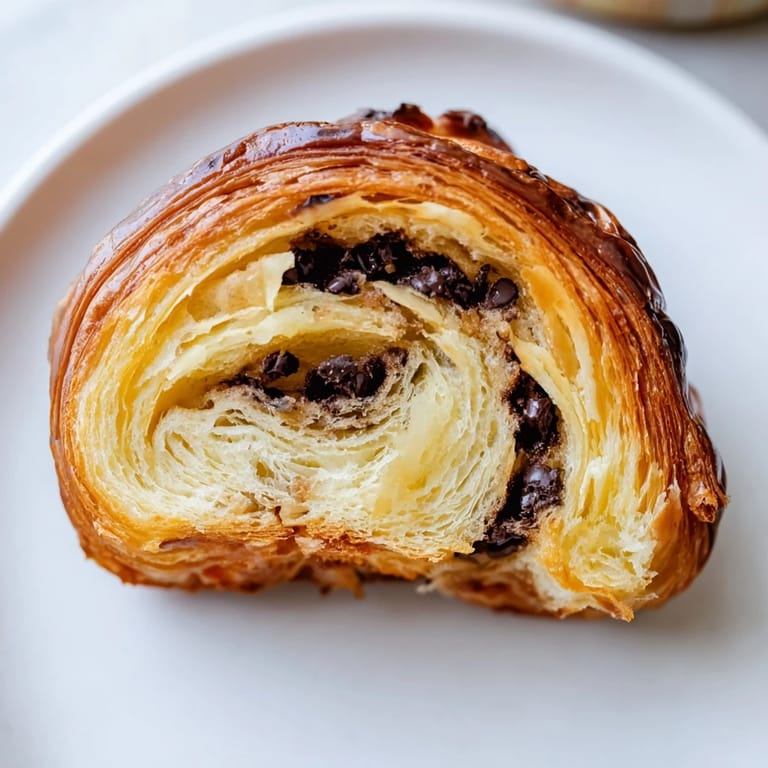
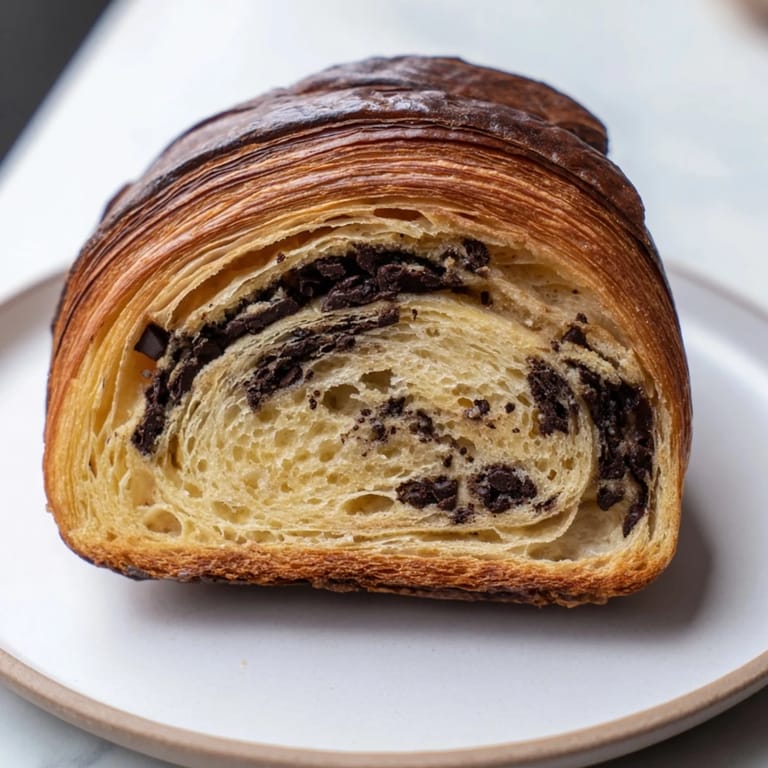
Croissants and cookies are actually cousins separated by a philosophy—one relies on precision and time, the other on casualness and eggs. When you bring them together, the laminated dough provides structure and that shattering texture that makes people stop talking, and the cookie dough brings moisture, tenderness, and actual flavor that lives between the layers. The chocolate is the third player, settling into every crevice and providing little surprises with each bite. It's ambitious without being pretentious, and that balance is exactly why it works.
The Science of Lamination
Lamination is just a controlled way of trapping butter between layers of dough, and steam does the actual work. As the crookie bakes, water in the dough turns to steam, puffing up the layers and separating them further. The butter in those gaps doesn't dissolve—it stays trapped, which is why you get that flaky, almost shattering texture. It's less magic and more physics, but understanding it means you'll make better laminated dough in every form going forward.
Making Them Your Own
Once you've made them once, you'll start imagining variations. Swirl in crushed pistachios or swap the dark chocolate for milk and white chocolate. Use brown butter for the cookie dough and suddenly they taste more sophisticated. Brush them with egg wash before baking for that professional shine that makes people ask if you bought them from a bakery. The base recipe is solid enough to carry any of these ideas.
- You can prep the laminated dough a day ahead and assemble with cookie dough in the morning—the waiting only improves the layers.
- If your kitchen is very warm, chill your bowl and even your rolling pin so the butter stays firm longer.
- Day-old crookies are actually better after a gentle warm-up in the oven—the chocolate melts again and the layers re-crisp.
 Pin it
 Make these when you have time and energy and the fridge is actually cold. They're proof that good things come to those who fold, literally.
Common Questions
- → What is laminated dough and why is it used?
Laminated dough is created by folding butter into the dough multiple times, forming thin layers that result in a flaky, tender texture after baking.
- → How do chocolate chips affect the texture?
Chocolate chips add gooey pockets of rich flavor within the crisp layers, balancing buttery flakiness with sweet richness.
- → Can I add nuts to this pastry?
Yes, chopped nuts can be sprinkled into the chocolate chip layer to introduce crunch and additional flavor.
- → Why is chilling important during preparation?
Chilling helps keep the butter solid within the dough, which is essential to create distinct flaky layers when baked.
- → What is the best way to serve this croissant hybrid?
It pairs beautifully with coffee or tea and is best enjoyed fresh or gently warmed to maintain its flaky texture and melted chocolate pockets.
- → How should leftovers be stored?
Store in an airtight container at room temperature for up to two days, or freeze for longer. Reheat gently to preserve texture.