 Pin it
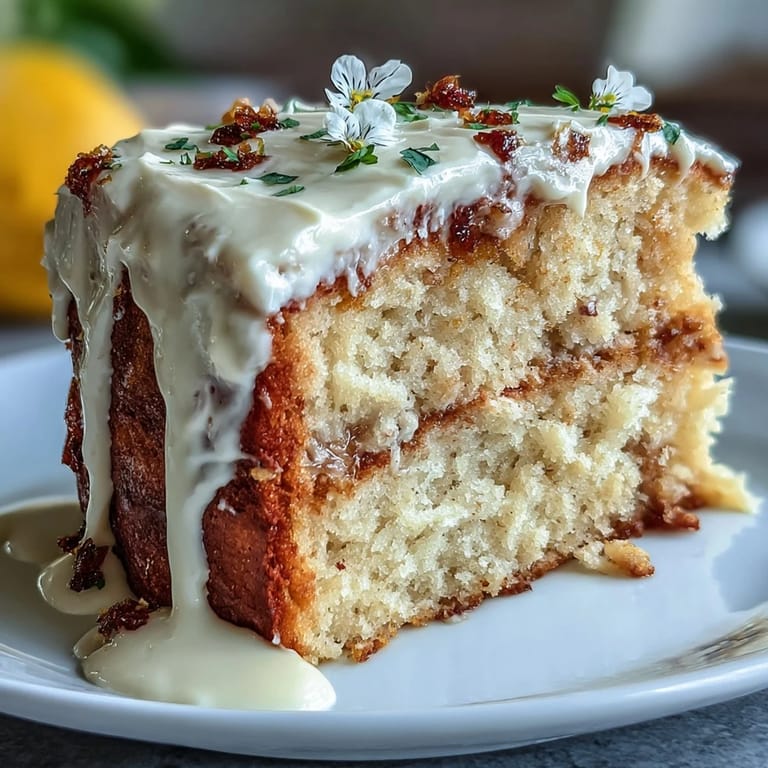
 There's something about assembling a naked cake that feels like you're creating edible architecture. I discovered this particular combination at a farmer's market in late April, where I watched a baker arrange these impossibly delicate layers while someone asked her the secret to making them look so effortlessly beautiful. She laughed and said it wasn't really a secret—just three good cake layers, a bold lemon curd, and flowers that speak for themselves. That conversation stuck with me, and now whenever spring arrives, I find myself building one of these.
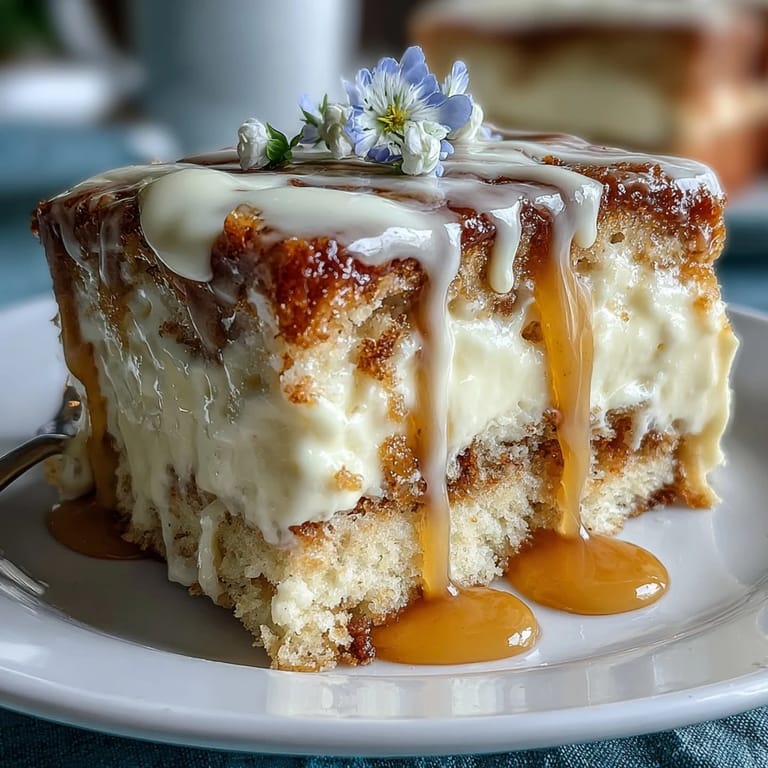
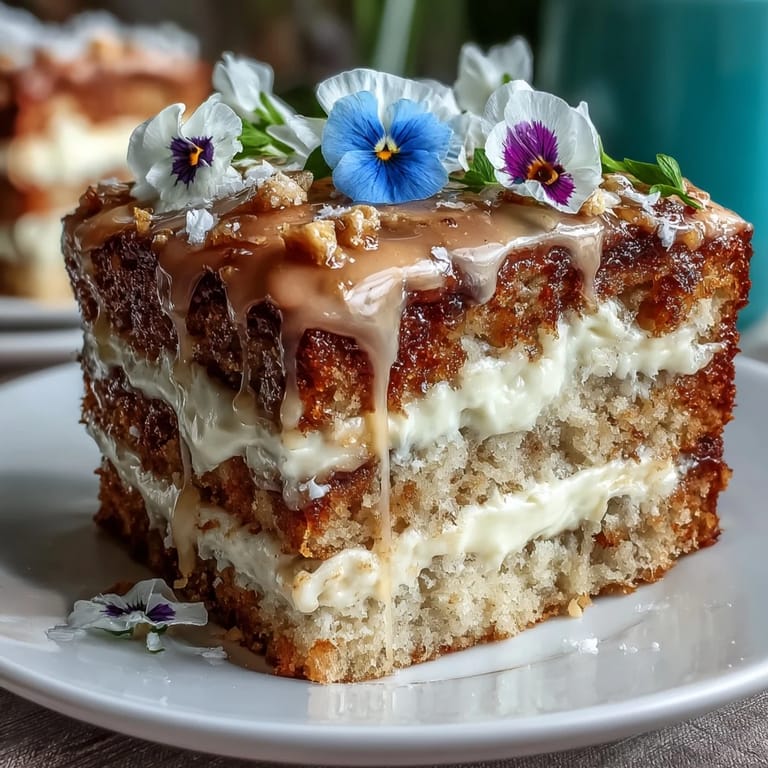
I made this for my sister's garden party last June, and watching her eyes light up when she saw it on the tea table reminded me why baking matters beyond the taste. She insisted on cutting into it herself, and the way the layers revealed themselves—cake, curd, cream, flower—felt like opening a present. People who normally skip dessert asked for seconds, which honestly says everything.
Ingredients
- All-purpose flour (2 1/2 cups): The foundation of your cake, and measuring by weight rather than volume makes a real difference here.
- Baking powder and baking soda (2 tsp and 1/2 tsp): These work together to give you that tender crumb that makes naked cakes actually work without crumbling.
- Unsalted butter (1 cup plus 1/2 cup): Use good butter—it's about half the flavor in this cake, so it deserves to be something you'd eat on toast.
- Granulated sugar (1 3/4 cups for cake, 3/4 cup for curd): The cake sugar creates structure while the curd sugar balances the bite of the lemon.
- Eggs (4 large plus 4 yolks): Room temperature eggs incorporate better and give you a lighter texture, while the yolks alone create that silky curd.
- Vanilla extract (2 tsp): A small amount that lets the lemon shine rather than competing with it.
- Buttermilk (1 cup): This adds moisture and a subtle tang that deepens the lemon flavor without announcing itself.
- Lemon zest and juice (3 lemons for zest, 4 for juice): Fresh lemon is non-negotiable—bottled juice won't give you that bright, living quality.
- Heavy cream (2 cups): Cold cream whips better and holds its peaks longer, especially if your kitchen is warm.
- Powdered sugar (1/3 cup): Dissolves completely into whipped cream unlike granulated sugar, which can create a gritty texture.
- Edible flowers (1–2 cups): These are the whole point of naked cakes, so hunt for flowers that are actually beautiful to you and absolutely confirm they're pesticide-free.
Tired of Takeout? 🥡
Get 10 meals you can make faster than delivery arrives. Seriously.
One email. No spam. Unsubscribe anytime.
Instructions
- Set your stage:
- Preheat to 350°F and prepare three 8-inch round pans with parchment—this is the moment to slow down and do it right, because sliding cake out of a pan with torn parchment is a mood killer. Having everything measured and ready before you start mixing is the difference between feeling calm and feeling rushed.
- Build your dry mixture:
- Whisk flour, baking powder, baking soda, and salt together in a medium bowl. This ensures the leavening is evenly distributed throughout the cake, which prevents dense spots and uneven rising.
- Cream butter and sugar:
- Beat them together for about three minutes until the mixture looks pale and fluffy—this is where you're trapping air that will help your cake rise. You'll feel the difference when you lift the beaters and see it hold its shape.
- Add eggs one at a time:
- Drop each egg in individually and beat well before adding the next one, mixing in the vanilla and lemon zest after the last egg. Each addition should be completely incorporated before moving on, which prevents the batter from looking curdled.
- Alternate your wet and dry:
- Add one-third of the flour mixture, then half the buttermilk, then another third of flour, then the rest of the buttermilk, then the final flour portion. Stop mixing as soon as everything is combined—overmixing develops gluten, which makes your cake tough rather than tender.
- Bake with attention:
- Divide batter evenly among pans and bake for 25–30 minutes until a toothpick comes out clean. Your oven might run hot or cool, so start checking at 23 minutes and trust what you see over what the timer says.
- Cool with patience:
- Let cakes sit in pans for 10 minutes, then turn them out onto wire racks to cool completely. Rushing this step and assembling warm cakes is how you end up with a leaning tower instead of something elegant.
- Make the lemon curd:
- Whisk lemon juice, zest, sugar, and egg yolks in a heatproof bowl over simmering water, stirring constantly until it thickens enough to coat the back of a spoon (about 8–10 minutes). The moment you remove it from heat, whisk in the butter until completely smooth, then let it cool—this curd will deepen in flavor as it sits.
- Whip your cream:
- Beat cold cream with powdered sugar and vanilla until stiff peaks form, then refrigerate until assembly time. If you whip it too far ahead, it can separate slightly, so aim for 30 minutes before you need it.
- Assemble with confidence:
- Place the first cake layer on your serving platter, spread half the lemon curd evenly across it, then add a layer of whipped cream. Repeat with the second layer, top with the third cake, and finish with a generous amount of whipped cream on top.
- Decorate just before serving:
- Scatter edible flowers and lemon zest curls across the top right before people see it. This is when the cake transforms from something delicious into something that stops conversation.
 Pin it
 The real magic happened when my friend's four-year-old daughter asked if the flowers on top were real, and when I said yes, she became convinced the cake had secret garden powers. That moment—where a cake becomes something magical rather than just dessert—is why I keep making this version.
Why This Cake Works as a Naked Cake
The beauty of a naked cake isn't that it's rustic or imperfect—it's that the layers themselves become the decoration. With this version, you're relying on three things: the color contrast between pale cake, golden curd, and white cream; the visible texture of the layers; and the edible flowers that crown everything. The cake needs to be sturdy enough to hold these layers without crumbling, but tender enough that eating it doesn't feel like biting into something that should be a structural support beam. This recipe hits that balance because the buttermilk and the proper mixing technique create a crumb that's both strong and yielding.
Timing and Temperature Matter Here
Room temperature eggs and buttermilk seem like a small detail until you're midway through mixing and your batter breaks. Cold ingredients don't incorporate smoothly, which means you end up overmixing to combine them—and that's when your tender cake turns tough. I learned this the hard way one afternoon when I was rushing and grabbed eggs from the fridge. The resulting cake was still good, but it wasn't the pillowy thing I was aiming for. Now I pull everything out about 30 minutes before I start, and the difference is noticeable enough that I won't skip it.
How to Keep Everything From Sliding
A naked cake looks intentional and effortless right up until the moment a layer shifts and suddenly it looks like you dropped it. The secret is patience: let everything cool completely, chill your layers in the refrigerator for at least 30 minutes before assembly, and make sure your lemon curd is completely cool before spreading it on the cake. When you're assembling, spread your curd and cream in even, modest layers rather than piling them on thick—restraint is what makes it stable. A final trick is using an offset spatula to gently press down as you place each layer, which helps them settle and grip.
- Keep your serving platter flat and level, or the whole cake will slowly tilt toward the lower side.
- If you're transporting this cake, assemble it at the destination rather than risking a tilted journey.
- The flowers go on last, literally moments before serving, so they stay perky and beautiful.
 Pin it
 This cake has a way of turning ordinary afternoons into moments that feel a little bit special, which is really what good baking does. Make it for someone, watch their face, and you'll understand why I keep coming back to this version.
Common Questions
- → How do I make the lemon curd smooth without lumps?
Whisk lemon juice, zest, sugar, and egg yolks constantly over simmering water until thickened, then add butter off heat and whisk until smooth.
- → What ensures the cake layers stay moist?
Using buttermilk and not overmixing the batter helps keep the sponge light and moist.
- → Can I substitute mascarpone in the whipped topping?
Yes, replacing half the whipped cream with mascarpone adds richness and sturdiness to the topping.
- → How should I handle the edible flowers safely?
Use only pesticide-free, edible-labeled flowers to decorate the cake for safe consumption.
- → What is the best way to assemble the layered cake?
Layer sponge cakes with lemon curd and whipped cream alternately, then top with cream and floral decorations just before serving.