 Pin it
 My grandmother had a peculiar ritual every December: she'd haul out an old ceramic crock from the back of her pantry and fill it with the driest, most unappetizing-looking fish you could imagine. The transformation that followed—from shriveled, desiccated cod into silky, delicate lutefisk—felt like kitchen magic to me as a child. Years later, I finally understood why she guarded this process so carefully; the patience and precision behind it was pure tradition, a thread connecting her kitchen to generations of Norwegian tables. Now when I make lutefisk, I'm not just cooking dinner; I'm honoring that quiet knowledge she passed down without ever needing to explain it fully.
I once made this for a Scandinavian potluck where half the guests had never tried lutefisk before, and the other half were waiting to judge me silently. What I remember most isn't the cooking—it's watching someone's face change from polite skepticism to genuine delight after that first bite. The creamy mustard sauce did most of the heavy lifting, but something about serving this particular dish made everyone relax, swap stories, and suddenly we were all talking about grandmothers and childhood meals we'd almost forgotten.
Ingredients
- Dried cod (lutefisk): Use exactly 1 kg of quality dried cod—this is the star, and it deserves respect; cheaper versions can have a mushy texture after soaking, so ask your fishmonger for their best recommendation.
- Cold water: You'll need enough to cover the fish completely, and the daily water changes are non-negotiable; they remove the lye and prevent that ammonia smell you've heard whispered about.
- Coarse salt: This 30-minute salt cure after soaking seasons the fish gently and firms up the texture just before baking.
- Unsalted butter and flour: These form your roux base—the foundation of a sauce that should be silky, not grainy.
- Whole milk: Use full-fat; it creates the richness that makes this dish feel like a celebration.
- Dijon and whole-grain mustard: The combination of both gives you sophistication and texture; don't skip the whole-grain.
- Boiled potatoes and crispbread: These aren't sides, they're partners that complete the traditional presentation and absorb that golden sauce.
Tired of Takeout? 🥡
Get 10 meals you can make faster than delivery arrives. Seriously.
One email. No spam. Unsubscribe anytime.
Instructions
- Start the soaking ritual:
- Rinse your dried cod under cold running water, really letting the water flow through it, because you're washing away years of salt and preservative. Submerge it in a large container filled with cold water, making sure every piece is covered completely.
- Keep faith during the long transformation:
- For five to six days, this is your kitchen's secret project—drain the water each morning and refill it fresh. The fish gradually softens and transforms, and you'll notice the water gets cloudier each day, which means the process is working.
- Finish the cure:
- After soaking, drain the fish thoroughly, sprinkle it with coarse salt, and let it sit for exactly 30 minutes. This firms up the texture and seasons it delicately, then you rinse off the salt and pat everything dry with paper towels.
- Bake until tender:
- Heat your oven to 200°C, place the fish in a covered baking dish with foil, and bake for 25 to 30 minutes until the flesh turns opaque and flakes apart with the gentlest pressure. The dish should smell mild and slightly sweet, never fishy or sharp.
- Build the mustard sauce:
- Melt butter in a saucepan over medium heat, then whisk in flour and cook for one minute while stirring constantly—you want a smooth paste, not a brown roux. Gradually pour in milk while whisking to prevent lumps, then let it simmer for three to four minutes until it coats the back of a spoon lightly.
- Season with mustard and intention:
- Stir in both types of mustard, a teaspoon of sugar to balance the acid, and salt and white pepper to taste. The sauce should taste bold and creamy, almost comforting—this is what elevates the delicate fish into something memorable.
- Come together on the plate:
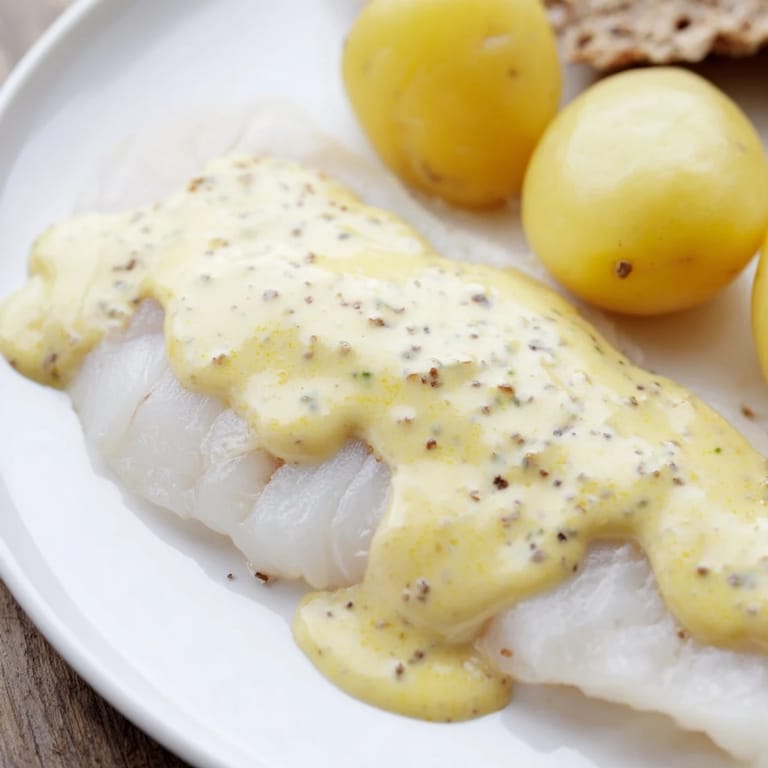
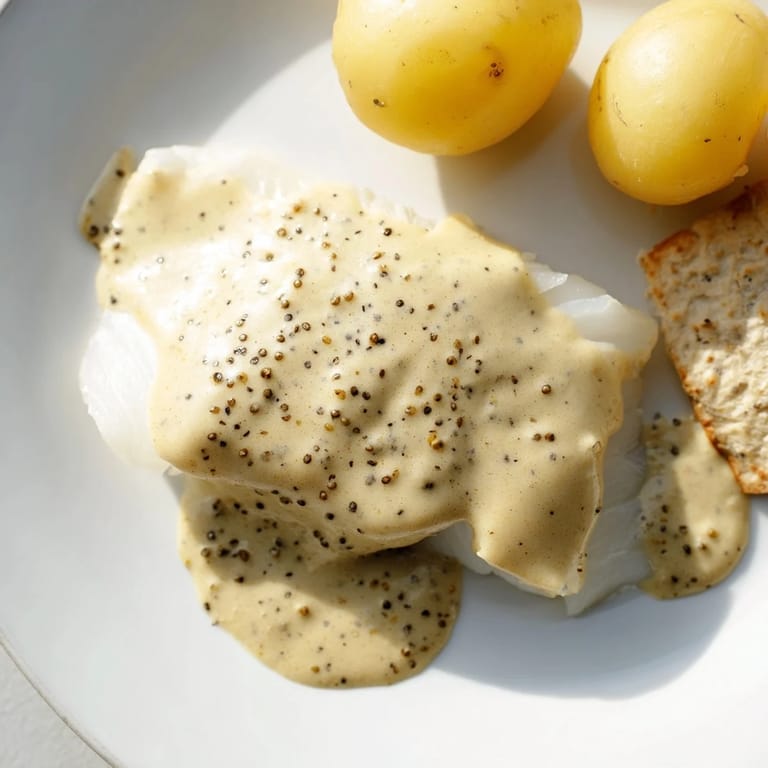
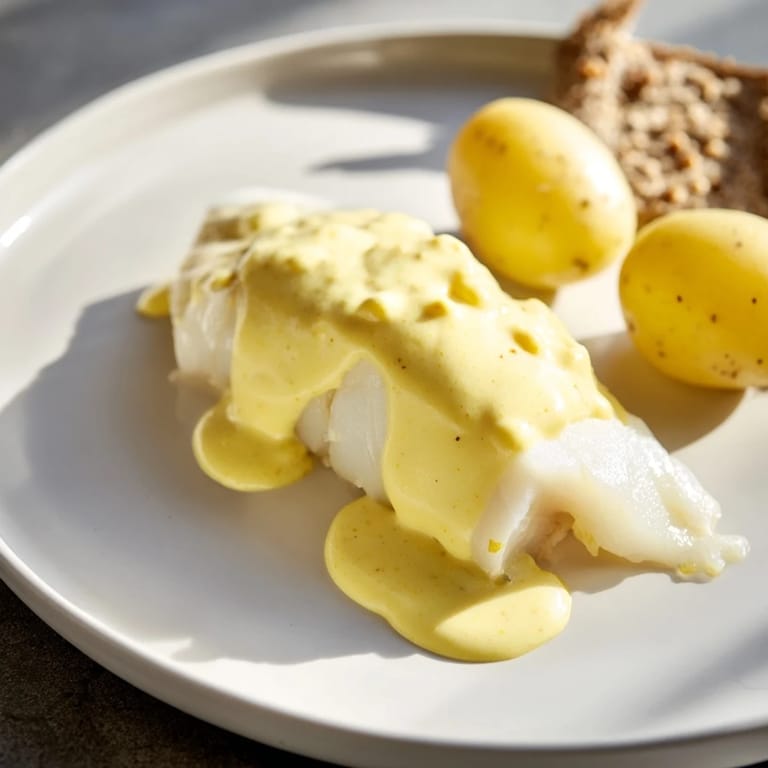
- Serve the hot lutefisk alongside boiled potatoes and crispbread, then spoon that golden mustard sauce generously over everything. A scatter of fresh parsley adds brightness if you have it.
 Pin it
 There's a moment during the baking, usually around the 20-minute mark, when the kitchen fills with a smell that's subtle and almost sweet—that's when you know you've done it right. It's nothing like the intimidating stories about lutefisk; it's gentle and inviting, and it reminds you why people have celebrated this dish for centuries.
The Secret to Not Being Afraid
Lutefisk has a reputation built almost entirely on fear—people talk about the texture, the smell, the mystery of it all. The truth is quieter: this dish is simply a masterclass in patience and respect for ingredients. Once you understand that the long soaking is designed to rehydrate the fish back to something tender and almost delicate, the process stops feeling intimidating and starts feeling logical. The key is trusting that each daily water change is working, even when you can't see the transformation happening.
Why the Mustard Sauce Changes Everything
I've had lutefisk plain, and I've had it with this sauce, and they're almost different dishes. The creaminess and tang of the mustard sauce doesn't just flavor the fish; it transforms the entire eating experience, turning something subtle into something memorable and deeply satisfying. The whole-grain mustard adds texture and visual interest, while the Dijon brings a refined edge that feels special without being fussy.
The Ritual of Serving
Lutefisk isn't meant to be casual; there's something about plating it carefully with boiled potatoes and crispbread that honors the work you've invested. The potatoes soak up that golden sauce, the crispbread provides a satisfying crunch, and together they create a meal that feels complete and intentional. This is food that asks you to slow down and notice the flavors, the textures, the quiet pleasure of sitting down with something truly traditional.
- Save some sauce; the crispbread becomes almost a vehicle for soaking up every last bit of that creamy mustard goodness.
- Serve everything hot, because this dish's delicate texture is best appreciated when the flavors are still lively and warm.
- If you're cooking for skeptics, start with a small portion and let them taste the sauce first—it's the gateway to understanding the entire dish.
 Pin it
 Lutefisk is the kind of dish that deserves to be made slowly, deliberately, and with the understanding that you're participating in something that matters. Once you've mastered it, you'll understand why it's celebrated, and you'll want to share it.
Common Questions
- → How long should lutefisk be soaked before cooking?
Typically, lutefisk needs to soak in cold water for 5–6 days, with daily water changes, to properly rehydrate and remove excess lye.
- → What is the best way to bake lutefisk for tender results?
Bake the soaked fish covered with foil at 200°C (390°F) for 25–30 minutes until it becomes opaque and flakes easily.
- → How is the creamy mustard sauce prepared?
The sauce starts with melting butter and whisking in flour to form a roux, then milk is gradually added and simmered until thickened before mixing in Dijon and whole-grain mustards, sugar, salt, and pepper.
- → Can the mustard sauce be made gluten-free?
Yes, using gluten-free flour instead of all-purpose flour in the sauce ensures it remains suitable for gluten-free diets.
- → What traditional sides complement this dish?
It is commonly served with boiled potatoes and crispbread or flatbread, often garnished with fresh parsley for added freshness.
- → Are there allergen concerns with these ingredients?
This dish contains fish, milk, mustard, and potentially gluten depending on the flour used; it’s important to check labels for allergens.