 Pin it
 The first time I made schnitzel, I was terrified of the meat mallet. My aunt had made it look so effortless, but when I held that mallet over the pork chop, I panicked—was I supposed to pulverize it or gently persuade it? That nervous energy somehow translated into the most satisfying thwack, and watching that thin, delicate cutlet emerge from under the plastic wrap felt like magic. Now, years later, that sound—the satisfying contact of mallet on meat—is the soundtrack to one of my favorite meals.
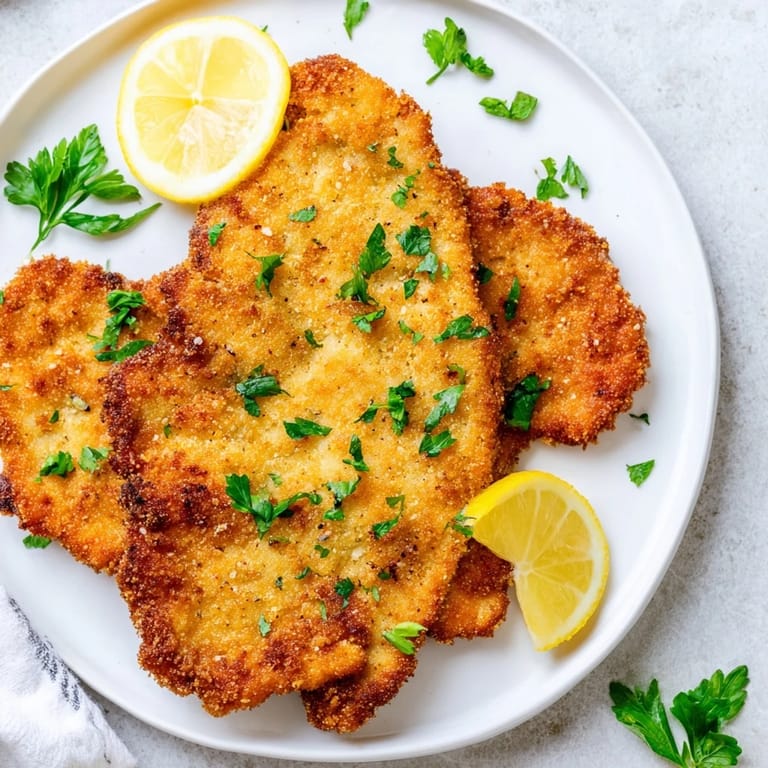
I remember bringing schnitzel to a potluck once, nervous because everyone else had elaborate casseroles and trendy grain salads. But the moment people bit into those golden cutlets with a squeeze of lemon, the room went quiet. That's when I realized this isn't a fancy dish trying to impress—it's an honest one that just happens to taste incredible and make people genuinely happy.
Ingredients
- Pork chops or chicken breasts (about 150 g each): The meat is your canvas, and thickness matters—pounding to a uniform 1/4 inch ensures even cooking and that tender bite every time.
- All-purpose flour: This first layer of the breading trio acts as the glue that holds everything together, so don't skip it even though it seems invisible.
- Eggs and milk: The egg wash is what locks in moisture and helps the breadcrumbs cling like they belong there, so whisk them together with a little milk to make it silky.
- Fine dry breadcrumbs: Using panko or finely ground breadcrumbs gives you that authentic German crunch that coarser crumbs just can't deliver.
- Vegetable oil or clarified butter (Butterschmalz): Clarified butter is traditional and adds a subtle richness, but neutral oil works beautifully if that's what you have.
- Salt, pepper, lemon wedges, and fresh parsley: These aren't afterthoughts—the squeeze of lemon brightens everything, and the parsley adds a fresh green note that cuts through the richness.
Tired of Takeout? 🥡
Get 10 meals you can make faster than delivery arrives. Seriously.
One email. No spam. Unsubscribe anytime.
Instructions
- Pound the meat into submission:
- Lay each piece between plastic wrap and go at it with a meat mallet, working from the center outward until you've got an even 1/4-inch thickness. You'll feel when it's right—the meat becomes tender and pliable, ready to fry.
- Season with intention:
- Salt and pepper both sides generously, but taste as you go so it doesn't become salty.
- Set up your breading station:
- Three shallow plates in a row: flour, egg-milk mixture, breadcrumbs. This assembly-line setup prevents a mess and keeps you from double-dipping wet hands into dry flour.
- Bread with confidence:
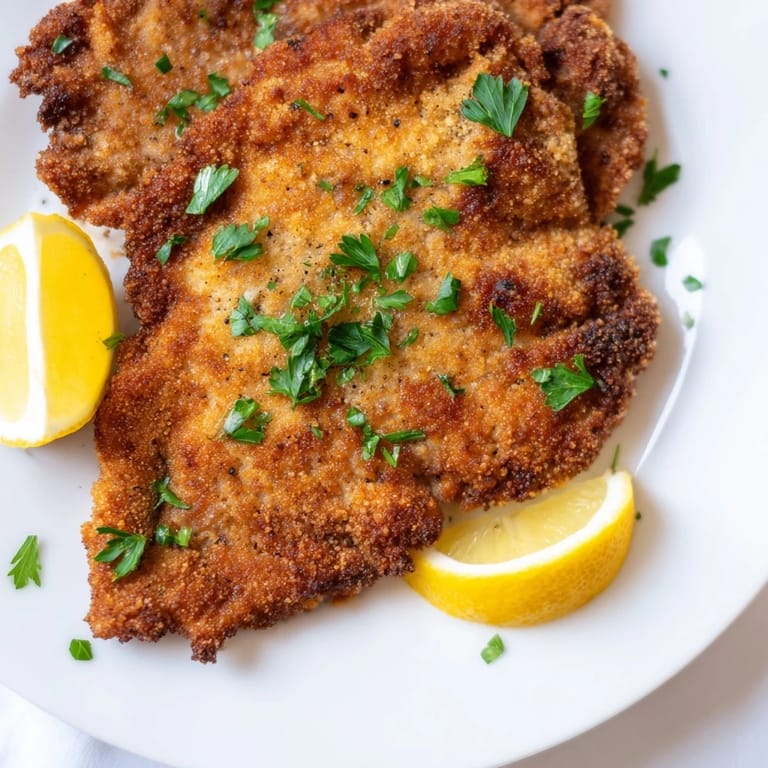
- Coat each cutlet in flour, shake off the excess, dip into egg, then roll in breadcrumbs and press gently—just enough to make sure they adhere. Over-pressing compacts everything and you'll lose that delicate crunch.
- Heat your pan to the right temperature:
- Medium-high heat matters because you want the crust to turn golden fast without the inside staying raw. When you add the cutlet, it should sizzle immediately.
- Fry until golden:
- Two to three minutes per side until the crust is a deep golden brown and the meat is cooked through. Work in batches if your pan is crowded—overcrowding drops the temperature and steam instead of frying.
- Drain and serve right away:
- Lift onto paper towels for just a minute to shake off excess oil, then plate it while the crust is still crackling.
 Pin it
 There was a moment during a winter dinner when my grandmother tasted my schnitzel and nodded—just once, quietly. She didn't need to say anything; I'd nailed the crispy crust and tender meat that had fed her family for decades. That single nod was worth more than a thousand compliments.
Why This Dish Matters
Schnitzel represents something beautiful about German cooking: it takes humble, affordable cuts of meat and transforms them into something elegant through technique, not expense. There's no pretension here, just respect for good ingredients and the discipline to execute them perfectly. Every time I make it, I'm participating in a quiet culinary tradition that values efficiency, clarity, and honest flavor.
Serving and Pairing
Tradition calls for potato salad and cucumber salad alongside the schnitzel, and honestly, that combination is untouchable—the cool, tangy salads provide the perfect contrast to the warm, crispy cutlet. A squeeze of fresh lemon over everything brings brightness and cuts through the richness in a way that feels both simple and sophisticated. If you're in the mood for something different, crispy fries work beautifully, or even a light green salad tossed with vinaigrette.
The Secret to Perfect Texture
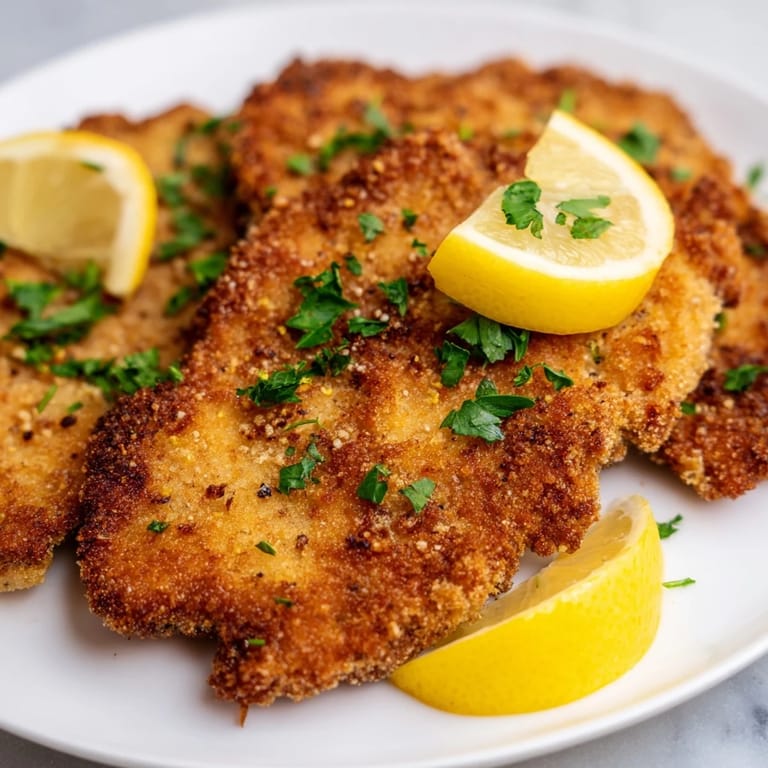
The difference between a limp schnitzel and a show-stopping one comes down to two things: respecting the oil temperature and resisting the urge to fuss once it hits the pan. I learned this the hard way after flipping too early and ending up with patches of pale crust. Now I set a timer, step back, and let the heat do its work—interference is the enemy of crispiness.
- Use a thermometer if you're uncertain about oil temperature; aim for around 350°F (175°C).
- Don't crowd the pan, and don't flip more than once per side.
- If you're cooking for a crowd, keep finished schnitzels warm in a low oven rather than plating them all at once.
 Pin it
 Schnitzel is the kind of meal that reminds you why you love cooking—fast, reliable, and capable of bringing genuine joy to a table. Make it tonight, and taste why this dish has endured for generations.
Common Questions
- → How do you achieve a crispy coating?
Use fine dry breadcrumbs and avoid pressing too hard on the coating to maintain a light, crispy texture when frying.
- → What type of meat works best?
Boneless pork chops or chicken breasts, pounded evenly to about 1/4 inch thickness for quick, uniform cooking.
- → What fat is ideal for frying?
Vegetable oil or clarified butter provides a high smoke point and adds flavor for golden, crispy cutlets.
- → How should cutlets be seasoned?
Season both sides with salt and freshly ground black pepper before breading for balanced taste.
- → What sides complement this dish?
Traditional accompaniments include potato salad, cucumber salad, or fries, enhancing the dish's flavors.