 Pin it
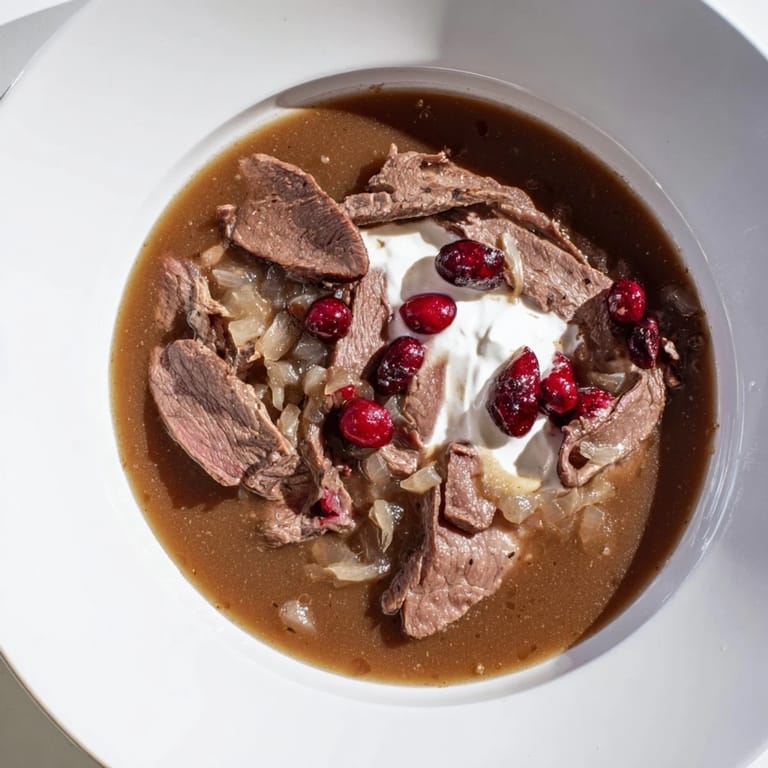
 The first time I tasted reindeer stew was on a frozen December evening at a cottage near the Arctic Circle, where the wood stove crackled and the windows frosted over as we ate. My host had prepared it without fanfare—just a simple pot of dark, glossy meat that fell apart at the touch of a spoon, the sour cream swirled through like snow melting into the broth. I remember being struck by how the juniper berries whispered their pine-forest secrets into every bite, how the lingonberries cut through the richness with their tart brightness. That meal taught me something: the best Nordic food doesn't shout, it settles into you like warmth.
I made this for a dinner party once, convinced the reindeer meat would be hard to find, but I tracked down a source at a specialty butcher and felt oddly proud stirring that pot, watching the sour cream melt into the mahogany-colored broth. My friends circled back for seconds without asking, which told me everything I needed to know about whether this recipe worked.
Ingredients
- Reindeer meat (800 g, thinly sliced): This is the heart of the dish—you want it sliced thin enough to brown quickly but substantial enough to stay tender through the long simmer. Venison or beef work perfectly if reindeer feels too adventurous.
- Butter and vegetable oil (2 tbsp and 1 tbsp): The combination gives you a high smoke point and a rich, almost nutty flavor as the meat browns.
- Onions (2 medium, finely sliced): They soften into the broth and add sweetness that balances the game flavors beautifully.
- Garlic cloves (2, minced): A minute in the hot pan is all these need to become fragrant and golden.
- Beef or game stock (300 ml): Use game stock if you can find it; it speaks the same language as the meat.
- Water (100 ml): This dilutes the stock just enough so the flavors don't become too intense.
- Sour cream (150 ml): This is what transforms the stew from rustic to silky, added right at the end so it doesn't break.
- Bay leaves and juniper berries (2 and 5): The juniper is optional but absolutely worth hunting down—those crushed berries are what make this taste like a Finnish forest in a bowl.
- Lingonberry preserves (100 g): The tart counterpoint that makes every spoonful more interesting; cranberry sauce substitutes well if you can't find lingonberries.
- Salt and pepper: Taste as you go near the end—you'll know when it's right.
Tired of Takeout? 🥡
Get 10 meals you can make faster than delivery arrives. Seriously.
One email. No spam. Unsubscribe anytime.
Instructions
- Get your pot hot and ready:
- Heat the butter and oil together over medium-high heat until the butter foams and the kitchen starts to smell irresistible. You want it hot enough that the meat sizzles immediately when it hits the pan, but not so hot it smokes.
- Brown the reindeer in batches:
- Work in two or three batches so the meat isn't crowded; crowding steams instead of browning. Each batch needs only two or three minutes per side until it's deep golden, then move it to a plate and carry on.
- Soften the onions and garlic:
- In that same pot with all the browned bits still clinging to the bottom, add the onions and let them cook low and slow for about five minutes until they turn translucent and start to caramelize slightly. Add the garlic and give it just one minute—any longer and it turns bitter.
- Bring everything back together:
- Return the meat to the pot along with the salt, pepper, bay leaves, and those crushed juniper berries, stirring gently so you don't break up the meat. Pour in the stock and water, and you'll see the liquid come up around the meat like a warm embrace.
- Low and slow is the secret:
- Bring everything to a gentle simmer, cover the pot, and let it cook on low heat for an hour and a half, stirring occasionally. The meat should be so tender it almost falls apart when you touch it with a spoon.
- Reduce and finish:
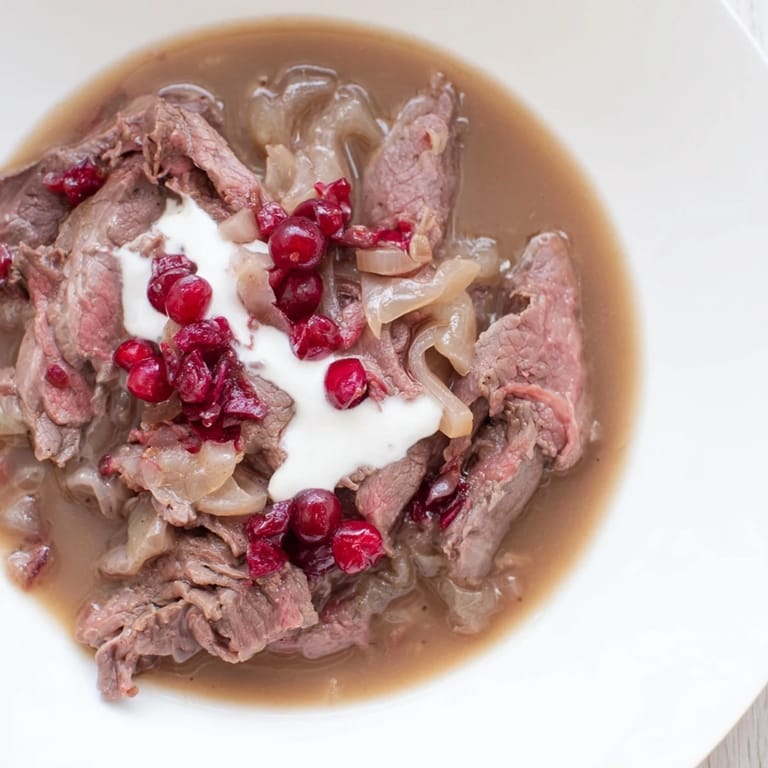
- Remove the lid and let it cook for another ten minutes so some of the liquid evaporates and the flavors concentrate. Stir in the sour cream at the very end, let it heat through for a couple of minutes, and taste for salt and pepper.
 Pin it
 The real moment came when I served this to someone who'd grown up eating reindeer stew in northern Finland, and they got quiet for a moment before saying it tasted like home. That's when I understood that some dishes carry memory in them, and cooking them right is a way of honoring where they come from.
Why Game Meat Matters
Reindeer and venison have a richness that regular beef doesn't quite capture, but it's not about being fancy—it's about the depth of flavor. The meat has lived a different life, eaten different grasses, and that shows up in the stew. If you're using beef as a substitute, choose a flavorful cut like chuck and don't apologize for it; it will still be delicious.
The Nordic Tradition of Sour Cream
In Scandinavian cooking, sour cream isn't an afterthought—it's the moment where a simple braise becomes something with character and refinement. The tang cuts through the richness of the meat and the earthiness of the juniper, making each spoonful feel balanced and alive. It's such a small addition but makes such a difference.
Serving and Pairing Ideas
Mashed potatoes are the traditional bed for this stew, and they're there for a reason—they soak up the sauce and make every spoonful more satisfying. Some people add pickled cucumbers on the side, which sounds odd until you taste how the vinegar brightness plays off the meat and cream.
- Serve this with creamy mashed potatoes and let people ladle the stew right over the top.
- A crisp green salad on the side keeps things from feeling too heavy.
- If lingonberry preserves feel hard to find, cranberry sauce or even a tart berry compote will do the same job beautifully.
 Pin it
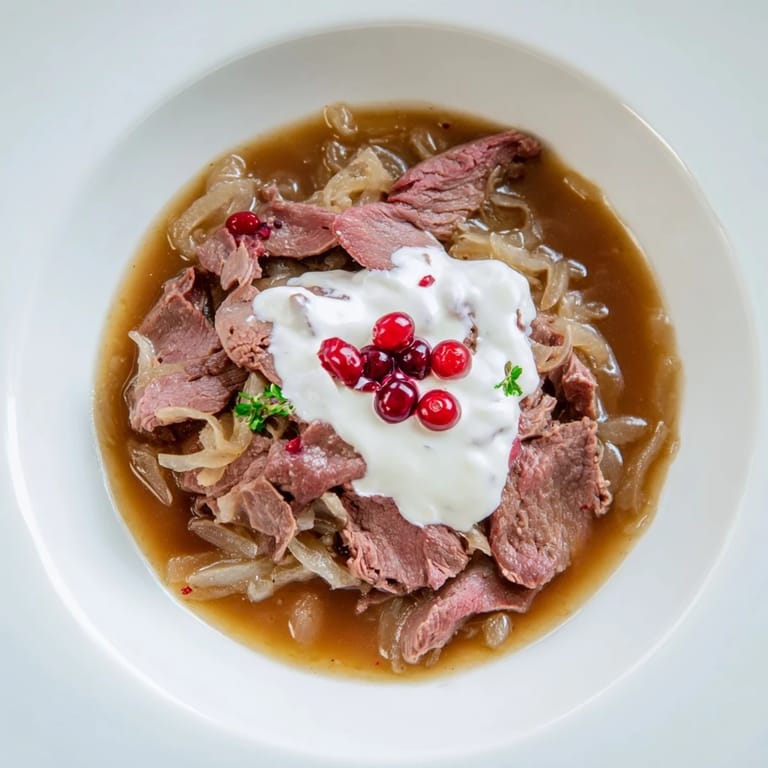
 This stew is proof that the best meals are often the simplest ones, built on good ingredients and patience. Cook it and you're not just making dinner—you're building a moment.
Common Questions
- → What can I substitute for reindeer meat?
Venison or beef can be used as alternatives, providing similar textures and flavors suitable for slow cooking.
- → How long should the stew be cooked?
The meat should simmer gently for about 1 hour and 30 minutes until tender, with an additional 10 minutes uncovered to reduce liquids.
- → What role do juniper berries play in the dish?
Juniper berries add a subtle piney, slightly resinous note that enhances the authentic Nordic flavor profile.
- → Can I use cranberry sauce instead of lingonberries?
Yes, cranberry sauce offers a similar tartness that complements the richness of the stew nicely.
- → What is the best way to serve this dish traditionally?
It is typically accompanied by mashed potatoes and a generous spoonful of lingonberry preserves or fresh berries.
- → Is this dish suitable for gluten-free diets?
Yes, provided the stock used is gluten-free, the dish contains no gluten ingredients.