 Pin it
 My grandmother's kitchen always smelled like butter and onions on frying day, and these Danish frikadeller were her answer to a quick, satisfying dinner. I learned to make them by watching her grate onions so fine they practically dissolved, and she'd say the secret was in that milk-soaked breadcrumb mixture—it kept everything tender and juicy. The first time I shaped them with wet hands, I was impatient and made them too big, but she just smiled and let them cook a minute longer. Now whenever I make them, I'm right back there, listening to that particular sizzle of butter and oil hitting the hot skillet.
I made these for a dinner party last winter when I wanted something that felt special but wouldn't keep me chained to the stove. My friend bit into one and closed her eyes—that's when I knew I'd gotten it right. Serving them with rye bread and pickles felt like I was sharing a piece of Copenhagen at my own kitchen table, and somehow that made everyone relax a little.
Ingredients
- Ground pork (500 g): The backbone of the recipe; if you can find pork shoulder ground fresh at your butcher, it has better flavor and a slightly looser texture that fries up more tender than pre-packaged.
- Onion, finely grated (1 small): Grate it almost to a paste so it melts into the meat and keeps everything moist without creating pockets of raw crunch.
- Egg (1): Your binder and the thing that makes them hold together as they fry without becoming dense.
- Whole milk (100 ml): It sounds counterintuitive, but milk soak the breadcrumbs into a paste that keeps the insides creamy.
- Breadcrumbs (60 g): Use panko or regular white breadcrumbs, never store-bought seasoned mix—you want the flavor to stay clean and porky.
- Salt (1 tsp), black pepper (½ tsp), allspice (½ tsp optional): Allspice is the Danish trick that makes people ask what's different; trust it even if you've never used it before.
- Butter and neutral oil (2 tbsp plus 1 tbsp): The butter gives flavor, the oil keeps things from burning—this combination is non-negotiable.
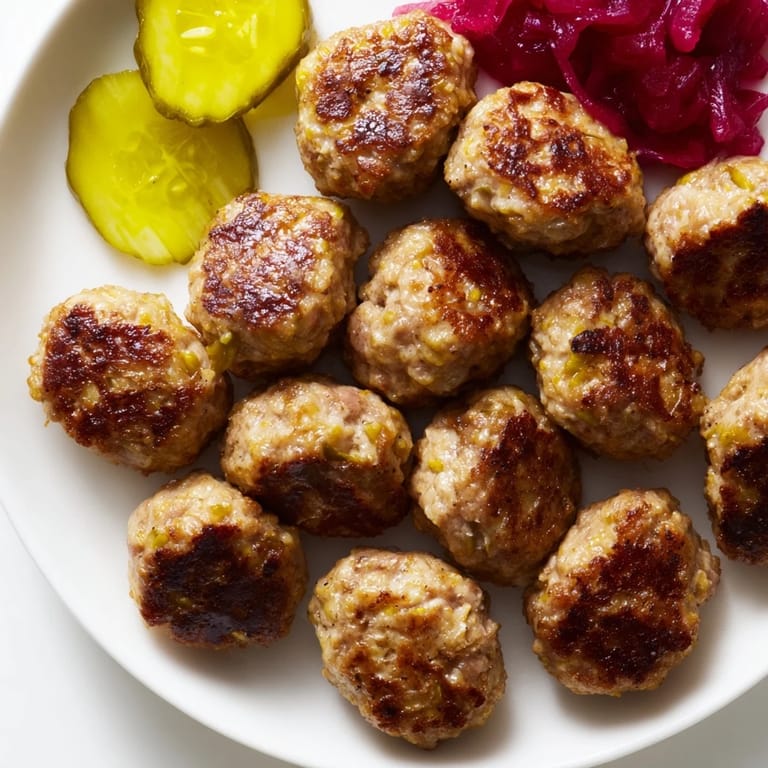
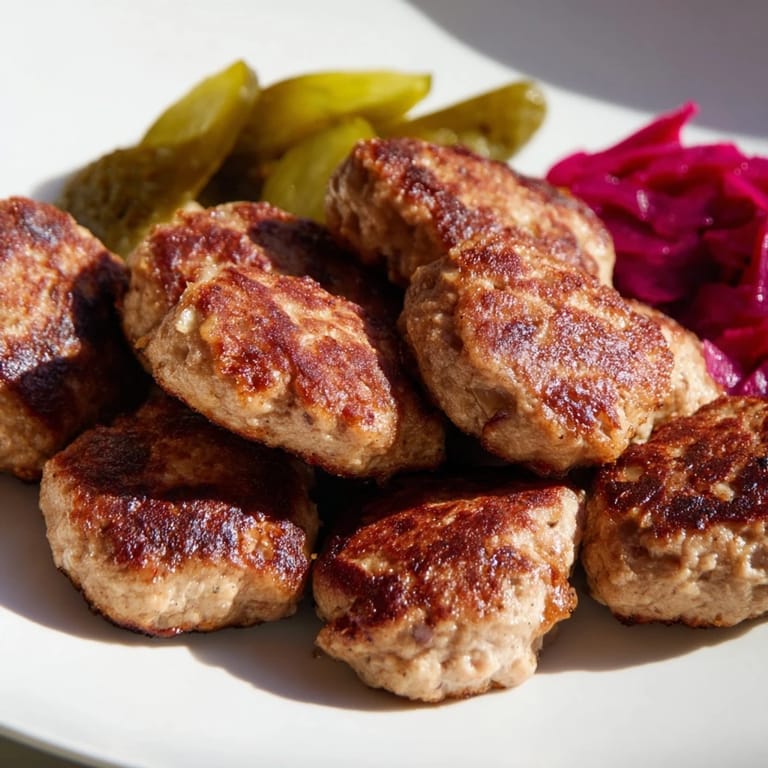
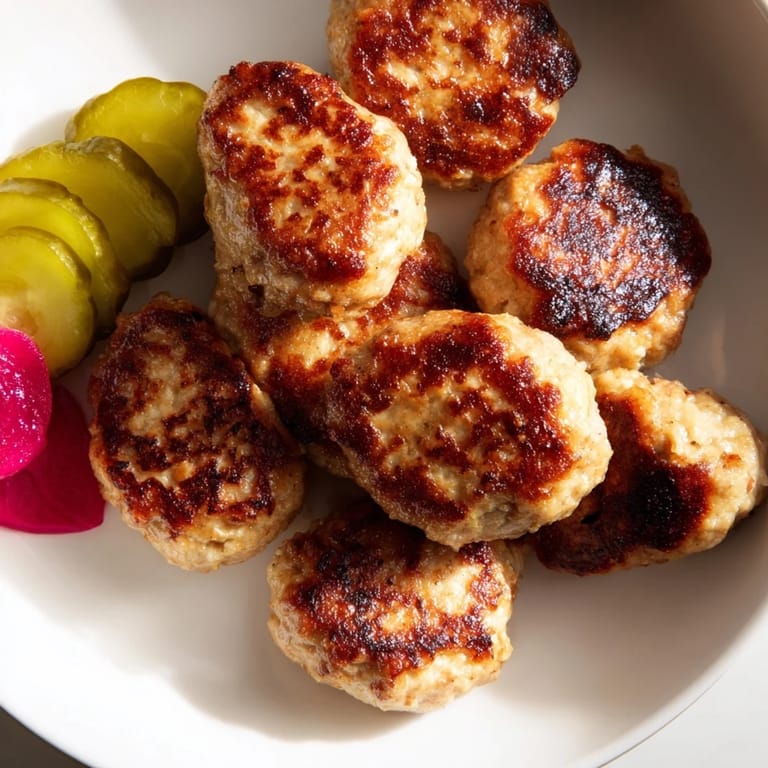
- Danish pickles for serving: Pickled cucumber, beetroot, or whatever vinegary thing you love; it's the counterpoint that makes the whole dish sing.
Tired of Takeout? 🥡
Get 10 meals you can make faster than delivery arrives. Seriously.
One email. No spam. Unsubscribe anytime.
Instructions
- Mix your base together:
- In a large bowl, combine pork, grated onion, egg, milk, breadcrumbs, salt, pepper, and allspice. Mix with your hands or a wooden spoon until everything looks cohesive and sticky—it should feel alive and loose, not dense.
- Let it rest:
- Walk away for 10 minutes and let the breadcrumbs drink up all that milk. This is when the magic happens, so don't skip it even if you're in a hurry.
- Shape into rounds:
- Wet your hands with cold water so the mixture doesn't stick. Shape into golf-ball-sized ovals or rounds—you should get 12 to 14 pieces. Don't overwork them or they'll get tough.
- Heat your pan properly:
- Put butter and oil in your skillet over medium heat and let it get foamy and shimmer. This is the moment where everything begins.
- Fry until golden:
- Working in batches so they're not crowded, lay them in the pan and use a spatula to gently flatten each one just a bit—this increases the surface area for browning. Fry 4 to 5 minutes per side until they're deep golden and a skewer through the middle comes out hot.
- Rest on paper towels:
- Transfer to a plate lined with paper towels to catch excess grease. Serve hot with pickles and bread if you like.
 Pin it
 There's a moment during a dinner party when someone goes quiet and just eats, and that's when you know you've made something that matters. These frikadeller have that power—they're humble enough to feel everyday but good enough to feel like a celebration.
Why This Works
The combination of milk and breadcrumbs acts like a sponge that keeps the meat moist even as it cooks. It's a technique you see in Swedish meatballs and Italian polpettine too, which tells you something about how cooks across different traditions figured out the same solution. That grated onion dissolves into almost nothing, adding depth without crunch, and the allspice is subtle enough to make people wonder what they're tasting.
Serving Suggestions
Pair these with a tangle of rye bread for that authentic Copenhagen feel, or serve them alongside buttered boiled potatoes that soak up all the pan juices. A creamy potato salad or quick red cabbage slaw makes them feel complete and traditional. Some people add a dollop of lingonberry jam or a spoonful of sour cream on the side, which sounds strange until you taste it.
Making Them Your Own
Once you understand how these work, you can start experimenting—half ground veal makes them more delicate, a pinch of nutmeg instead of allspice takes you toward Swedish territory, and adding finely minced fresh parsley gives them a fresher edge.
- A tiny squeeze of lemon zest in the mixture adds brightness without changing the essential character.
- If you can't find allspice, skip it rather than substituting; the dish is good without it.
- Make extra and freeze the cooked ones in an airtight container—they reheat beautifully in a low oven or even a skillet with a little butter.
 Pin it
 These frikadeller are the kind of food that reminds you why home cooking matters—simple, warm, and somehow better than anything you could order. Make them once and they'll become a regular visitor to your table.
Common Questions
- → What type of meat is used in Danish frikadeller?
Ground pork is primarily used, often mixed with veal for a lighter texture.
- → How are the meatballs shaped for cooking?
They are formed into oval or round balls about the size of a golf ball.
- → What is the best method for cooking these meatballs?
Pan-frying in butter and neutral oil over medium heat until golden and cooked through is recommended.
- → What traditional accompaniments suit these meatballs?
Danish pickles, rye bread, or boiled potatoes complement the flavors well.
- → Can spices be adjusted for different tastes?
Yes, ground allspice adds authentic flavor but can be omitted if preferred.