 Pin it
 I'll never forget the first time I realized that the best gatherings aren't about elaborate dishes—they're about putting delicious things on a table and letting people help themselves. It was a Sunday afternoon when my aunt showed up with a sprawling wooden board covered in meats, cheeses, and vegetables, and somehow that simple arrangement created more conversation and connection than any sit-down meal ever could. That's when it clicked: a good spread is an invitation to slow down, taste different things, and enjoy each other's company. Now whenever I need to feed a crowd without stress, I build one of these platters.
I made this for my daughter's college friends during their first semester break, and watching them fill their plates over and over, trying different combinations, made me realize how much comfort there is in choice and plenty. My kitchen filled with laughter and the sound of crackers crunching, and that's when I understood that this simple platter had become the centerpiece of a perfect evening.
Ingredients
- Sliced cooked ham (200 g): The backbone of any good meat selection—it's mild enough that everyone eats it, salty enough to be interesting, and budget-friendly enough to buy generously
- Sliced turkey breast (200 g): Adds variety without competing for attention; pairs beautifully with the cheddar
- Sliced salami (150 g): This is where the deeper flavor comes in—a little goes a long way, and it signals that you've thought about interesting flavors
- Mild cheddar, sliced (200 g): Choose the kind that's substantial enough to stay on a cracker without falling apart; mild means it won't overwhelm delicate palates
- Swiss cheese, sliced (150 g): The holes make it look fancy and it has enough personality to stand alone or pair with meats
- Cream cheese (100 g): Spread it on crackers or eat it plain—it's the comfort cheese that brings everything together
- Carrots, sliced into sticks (2 large): The bright orange catches the eye and the crunch reminds people they're eating something good for them
- Cucumber, sliced into rounds (1): Cool and refreshing, these feel light after a few bites of meat and cheese
- Red bell pepper, sliced (1): The sweetness balances the salty meats, and the color makes the platter sing
- Cherry tomatoes (1 cup): Pop them whole into your mouth for a moment of brightness; they're the garnish that also feeds you
- Assorted budget-friendly crackers (400 g): Buy the variety packs—nobody argues when there are options, and these don't need to be expensive to be good
- Baguette, sliced (1): Toast it lightly if you want it sturdier, or leave it soft if you prefer it tender—either way, it soaks up the cream cheese beautifully
- Hummus (1 cup): A vegetable-friendly dip and a nod to different cuisines all at once
- Green olives (1/2 cup): For the people who reach for them specifically and for that salty Mediterranean moment
- Pickles (1/2 cup): The acidic brightness that makes you reach for another cracker
Tired of Takeout? 🥡
Get 10 meals you can make faster than delivery arrives. Seriously.
One email. No spam. Unsubscribe anytime.
Instructions
- Start with the big things:
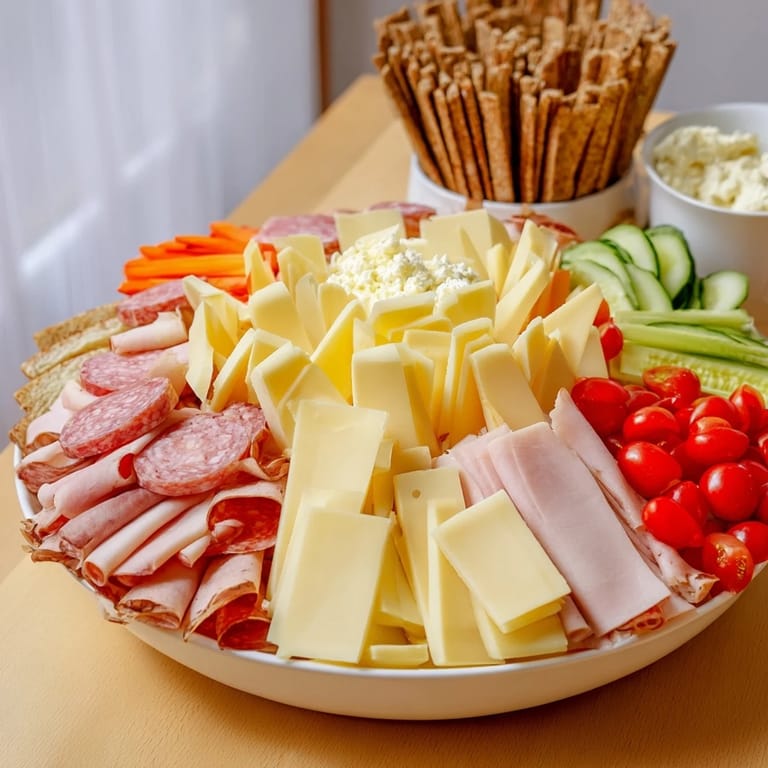
- Find a large platter—the bigger the better, honestly, because empty space doesn't look abundant. Arrange your piles of sliced meats at different corners, generous and loose, not stacked like you're saving space. We're celebrating abundance here.
- Create a cheese landscape:
- Next to each meat pile, fan out your cheese slices like you're dealing cards. They should overlap slightly so they look plentiful but stay separate enough to grab one without disturbing five others. This is where the platter starts looking like you know what you're doing.
- Build vegetable mountains:
- Fill the remaining spaces with vegetables in their own little heaps—carrots together, cucumber rounds in one spot, pepper slices in another. Don't scatter them; stack them proudly. People eat with their eyes first.
- Nestle in the dips:
- Find small bowls and fill them with cream cheese, hummus, olives, and pickles. Tuck these bowls into the gaps between the vegetables. They should feel like little discoveries.
- Build the cracker architecture:
- Create tall, generous stacks of crackers and baguette slices around the edges and in any remaining spaces. Stack them so they lean slightly—this makes them easy to grab and looks intentional, not accidental. You want people to see them from across the room.
- Step back and assess:
- Take a moment to look at your work. Are there empty spaces? Fill them. Do some colors feel lonely? Add something next to them. The platter should look so full that people feel welcome to take generous portions without guilt.
- Serve with confidence:
- Put it on the table and step back. As people eat, you'll notice the shapes change, and that's okay—encourage them to keep refilling the depleted areas. This platter lives and breathes as people enjoy it.
 Pin it
 My moment of revelation came when I served this platter to my book club and watched a conversation that would have felt formal around a dinner table turn into something warm and messy and real. People stood, wandered, reached across each other, and somehow that movement made the evening feel alive. I learned that day that feeding people isn't about impressing them with technique—it's about giving them permission to enjoy themselves.
The Art of Arrangement
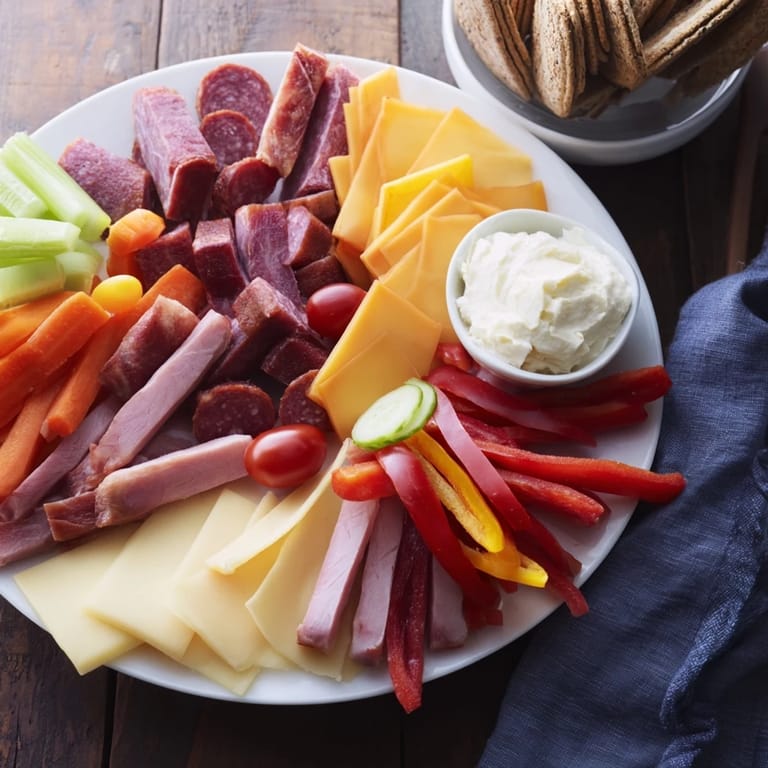
The platter is your canvas, and you're not just arranging food—you're creating a landscape that invites people to explore. Think about color balance: those deep red tomatoes next to the pale cream cheese, the bright orange carrots playing against the white Swiss cheese. Think about texture variety too: keep the soft things away from the super crunchy things so that every bite feels different. The best platters feel both abundant and intentional, like every item earned its place.
Making It Your Own
This is the beautiful part—once you understand the basic structure, you can build infinite versions. In summer, add fresh fruit like grapes or apple slices. In winter, include roasted vegetables like caramelized mushrooms or roasted sweet potato rounds. Want it vegetarian? Swap the meats for more cheeses, add nuts, include roasted chickpeas for crunch. The formula stays the same: proteins, dairy, vegetables, crackers, and something with personality. The details become your signature.
- Scout your local markets for seasonal vegetables and cheeses you've never tried—these become the conversation starters
- Always taste one of each item before arranging so you know what pairs well and which things speak to each other
- Keep a mental note of what disappears first from your platter—that's what your people actually want, and that's what deserves more space next time
Timing and Preparation
The genius of this platter is that it requires almost no cooking, which means you can create it right before people arrive or even while they're settling in. If you're serving a crowd of six, 20 minutes is realistic. For a larger group, you can prep everything an hour ahead and assemble 15 minutes before serving. The vegetables stay bright and the meats stay fresh when you work this way.
 Pin it
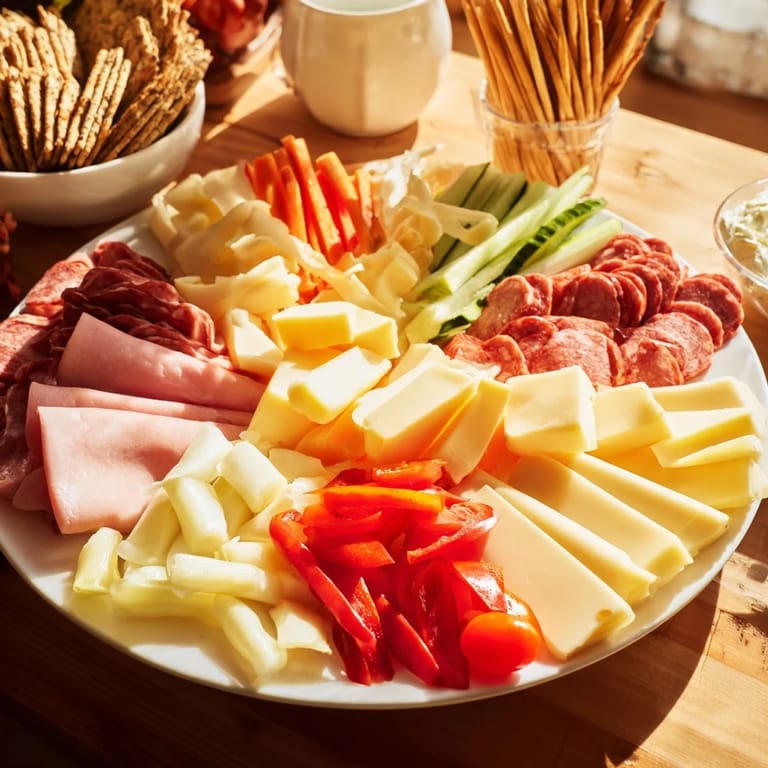
 This platter has taught me that the best entertaining is the kind where you're not trapped in the kitchen—you're there in the room, laughing with your people, taking a cracker when the moment feels right. That's the whole point.
Common Questions
- → What meats work best for this spread?
Sliced cooked ham, turkey breast, and salami provide a balanced variety of flavors and textures.
- → How can I make a vegetarian version?
Simply omit the meats and add extra cheeses, roasted vegetables, or plant-based deli slices for variety.
- → What vegetables complement the platter?
Carrot sticks, cucumber rounds, red bell pepper slices, and cherry tomatoes add freshness and crunch.
- → What types of bread and crackers are recommended?
Budget-friendly assorted crackers and sliced baguette provide ample crunch and volume for sharing.
- → How should this platter be served?
Arrange ingredients on a large tray with dips and extras spread evenly. Serve immediately and replenish as needed.